
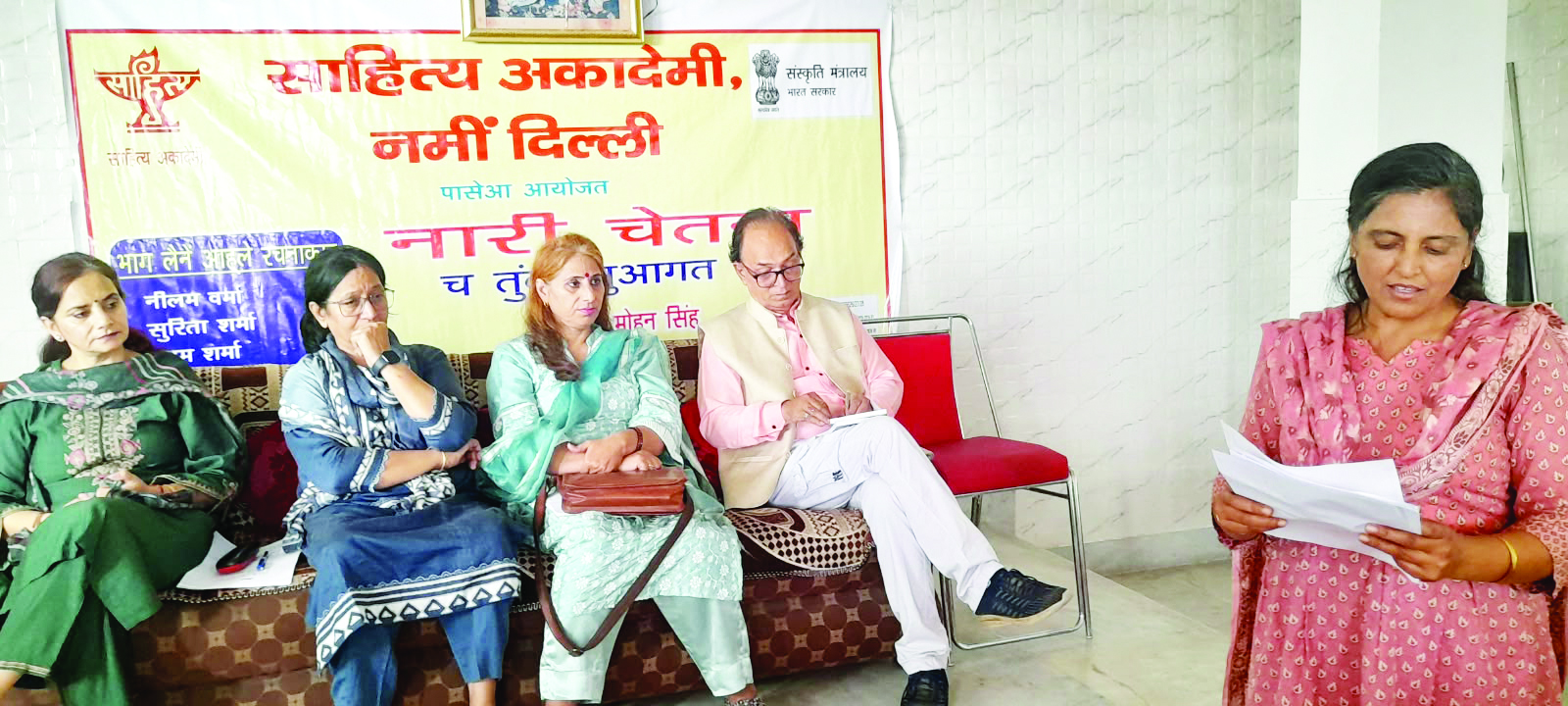
JAMMU, Oct 11: The Sahitya Akademi, New Delhi, organised a special literary programme, ‘Naari Chetna’, dedicated to prominent Dogri women poets at Vishvakarma Mandir, Gurha Bakshi Nagar, Jammu, on Sunday.
The programme featured renowned Dogri poetesses Neelam Verma, Surita Sharma, Poonam Sharma and Chanchal Bhasin, who captivated the audience with their literary creations and celebrated the richness of the Dogri language through poetry. The audience appreciated their presentations and enjoyed the literary gathering.
The programme was chaired by Mohan Singh, a Sahitya Akademi Award recipient and Padma Shri awardee, who also serves as Convenor of the Dogri Advisory Board of the Sahitya Akademi. In his welcome address, he outlined the various schemes and initiatives undertaken by the Akademi for the promotion and development of Indian languages and literature.
Mohan Singh highlighted that the Sahitya Akademi, recognised as India’s National Academy of Letters, works towards the development of all 24 languages recognised by the organisation. He emphasised the importance of providing writers with opportunities to showcase their literary contributions and encouraging the growth of regional languages.
Explaining the significance of the ‘Naari Chetna’ programme, he said the initiative was designed to provide a dedicated platform to prominent women writers who contribute to the promotion and preservation of their mother tongue. The programme seeks to recognise their literary achievements, encourage creative expression and strengthen the presence of women in the literary landscape.
The participating poets presented their original works, offering the audience an engaging experience through their creative expressions in Dogri. Their compositions reflected the richness of the language and highlighted the contribution of women writers to the region’s literary heritage.
The programme served as an important platform for celebrating Dogri literature and recognising the role of women poets in preserving and promoting their mother tongue. It also reaffirmed the Sahitya Akademi’s commitment to supporting literary talent and encouraging the continued growth of Indian languages.