
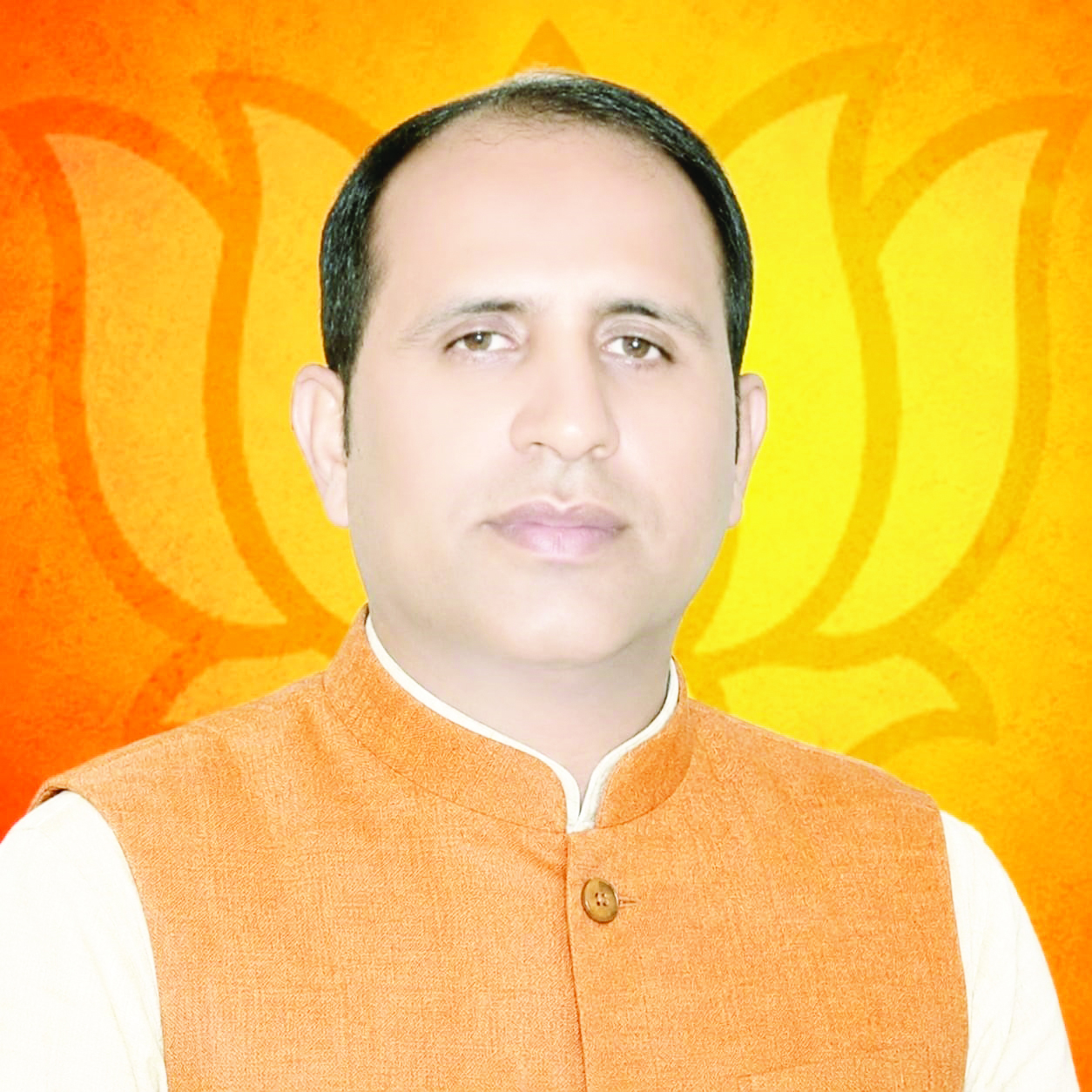
JAMMU, Nov 3: Senior BJP leader and former Sarpanch Adv Devraj Sharma has said that the reported reduction in poverty in India over the past decade highlights the importance of sustained welfare delivery, infrastructure development, economic opportunities and empowerment of economically weaker sections.
Reacting to Prime Minister Narendra Modi’s statement that around 50 crore people had moved out of poverty over the last 10–12 years, Sharma said that poverty alleviation must be assessed through measurable improvements in people’s living conditions, access to essential services and opportunities for sustainable livelihoods.
He observed that the Prime Minister’s emphasis on empowering people rather than limiting poverty alleviation to financial assistance reflected the importance of connecting welfare programmes with economic opportunities, infrastructure and employment generation.Sharma said that the Opposition’s allegation that the BJP-led government at the Centre had done nothing for the country or Jammu and Kashmir needed to be examined against documented developments, government expenditure, completed projects and improvements in public service delivery. He added that political criticism should be accompanied by a factual assessment of achievements as well as outstanding challenges.
Referring to Jammu and Kashmir, Sharma said that the Union Territory had witnessed significant infrastructure development, particularly in railway connectivity, road networks, tunnels, power infrastructure and public facilities.
He described the commissioning of the 272-kilometre Udhampur-Srinagar-Baramulla Rail Link (USBRL) in 2025 as a major development for the region. The project, involving an investment of approximately Rs 43,780 crore, has connected the Kashmir Valley with the national railway network and opened new possibilities for passenger movement, transportation of agricultural produce, trade and tourism.
He said that the Chenab Rail Bridge, the Anji Khad Bridge and the expansion of railway infrastructure represented important engineering achievements in the difficult Himalayan terrain. These projects have particular relevance for residents of remote areas who have historically faced transportation difficulties.
Sharma also referred to the inauguration of the Sonamarg Tunnel in January 2025, observing that improved connectivity can facilitate tourism, support local businesses and strengthen access to essential services in geographically challenging areas.
Highlighting the importance of rural connectivity, he said that road development under the Pradhan Mantri Gram Sadak Yojana had improved access to numerous habitations. He maintained that better roads are particularly important for farmers, students, patients, traders and residents of border and hilly areas.
The BJP leader said that development should not be measured exclusively through large infrastructure projects. Access to drinking water, sanitation, electricity, healthcare, education, housing and financial services also determines whether ordinary families experience tangible improvements in their lives.
He emphasised that welfare initiatives such as Pradhan Mantri Awas Yojana, Ayushman Bharat, Jal Jeevan Mission, Swachh Bharat Mission, Ujjwala Yojana and free food grain assistance have been important components of India’s social welfare framework.
According to Sharma, their impact should be evaluated through actual beneficiary coverage, quality of implementation and the extent to which deserving families receive assistance without unnecessary delays.
He further observed that Jammu and Kashmir’s development requirements demand special attention because of its mountainous geography, scattered habitations, border location and difficult climatic conditions.
“Development must reach the last village, the last household and the last deserving beneficiary. The real purpose of governance is fulfilled when a poor family gains access to a secure home, clean drinking water, healthcare, education, electricity and opportunities to improve its economic condition,” he said.
Sharma also stressed the importance of addressing unemployment, strengthening agriculture and horticulture, supporting small traders and entrepreneurs, improving tourism infrastructure and creating sustainable employment opportunities for local youth.
He said that farmers in Jammu and Kashmir, particularly those engaged in horticulture, dairy farming and agriculture, require better market connectivity, storage facilities, modern technology and institutional support to improve their incomes.
He added that tourism and allied sectors could generate employment across the Union Territory if adequate attention was given to infrastructure, environmental protection, hospitality training and local entrepreneurship.
Referring to the broader issue of poverty reduction, Sharma said that economic progress must be inclusive and should benefit rural households, women, marginalised communities, small farmers, daily wagers and economically weaker sections.
He also emphasised that the reduction of poverty should not lead to complacency, as families continue to face challenges relating to the cost of living, employment, healthcare expenses and access to quality education.
Every family that moves towards economic security, every village that receives better connectivity and every young person who gets an opportunity to build a livelihood represents progress that deserves to be measured and sustained,” Sharma added.