
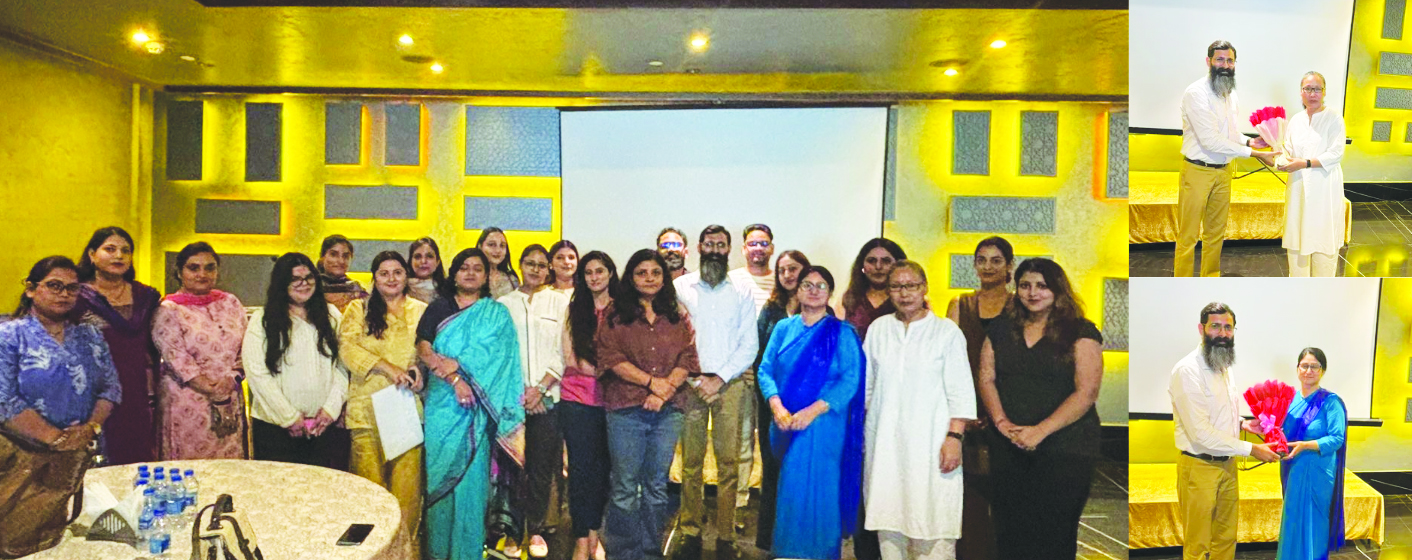
JAMMU, Aug 30: In what was described as the first gathering of its kind in the region, more than 20 clinical and counselling psychologists, psychiatric social workers and special educators came together in Jammu under the aegis of Dimaagi Mind Care & Research Centre, Jammu, to deliberate on emerging mental-health challenges and the need for greater professional coordination.
The Continuing Medical Education (CME) programme was held on the theme “Adolescent Mind: Understanding a Generation under Pressure” and brought together mental-health professionals to discuss the growing psychological pressures faced by adolescents and possible measures to address them.
The session was chaired by Dr. Shabnum Rivees (MPhil, PhD), Senior Clinical Psychologist, and Dr. Esther Bloria (MPhil, PhD), Senior Psychiatric Social Worker, while the presentation was delivered by Dr. Rajinder Kumar (MD Psychiatry), Clinical Director, Dimaagi Mind Care & Research Centre.
During the deliberations, participants stressed the need for greater clarity regarding the professional roles and boundaries of clinical and counselling psychologists. The gathering also called for proper registration of practitioners and greater public awareness about the importance of consulting qualified and licensed mental-health professionals rather than relying on unregulated life coaches or NLP practitioners for mental-health concerns.
The participants highlighted the growing mental-health burden among adolescents. Citing WHO estimates, the forum noted that one in every seven adolescents globally experiences a mental-health condition. They also referred to recent NCRB data indicating a 4.3 per cent rise in student suicides between 2023 and 2024.
The NCERT Manodarpan Survey 2022 was also discussed, with the participants noting that 81 per cent of students identified studies, examinations or results as major causes of anxiety. Girls were reported to have more frequently experienced symptoms such as anxiety, tiredness, tearfulness and loneliness.
The professionals emphasised that the situation requires coordinated intervention involving families, schools, healthcare professionals, educators and policymakers.
The forum called for greater attention to postpartum depression, suggesting the introduction of screening checklists in hospitals along with family counselling programmes. Participants also stressed the need to create awareness regarding the possible side effects and dependency risks associated with commonly prescribed psychiatric medications.
Another important demand was for training teachers in the early recognition of childhood mental-health and developmental disorders, enabling timely referrals and interventions. The participants further proposed conducting workshops and awareness seminars in rural areas to ensure that mental-health services are not limited to urban populations.
The gathering also proposed establishing a dedicated tele-mental health service for Jammu, along the lines of the national Tele-MANAS initiative, to improve access to professional mental-health support, particularly for people living in areas where specialised services are not readily available.
Participants agreed on the importance of establishing a clear referral mechanism among different mental-health disciplines, allowing patients to receive appropriate care from the relevant professionals at the right stage.
The meeting also highlighted the need for a representative body for mental-health professionals in Jammu and Kashmir. Participants observed that there is currently no dedicated association bringing together professionals from different mental-health disciplines in the region and expressed the need to work towards establishing such a platform.
The participants resolved to continue the dialogue and agreed that the forum would meet again to take forward the issues discussed and strengthen collaboration among mental-health professionals in Jammu and Kashmir.