
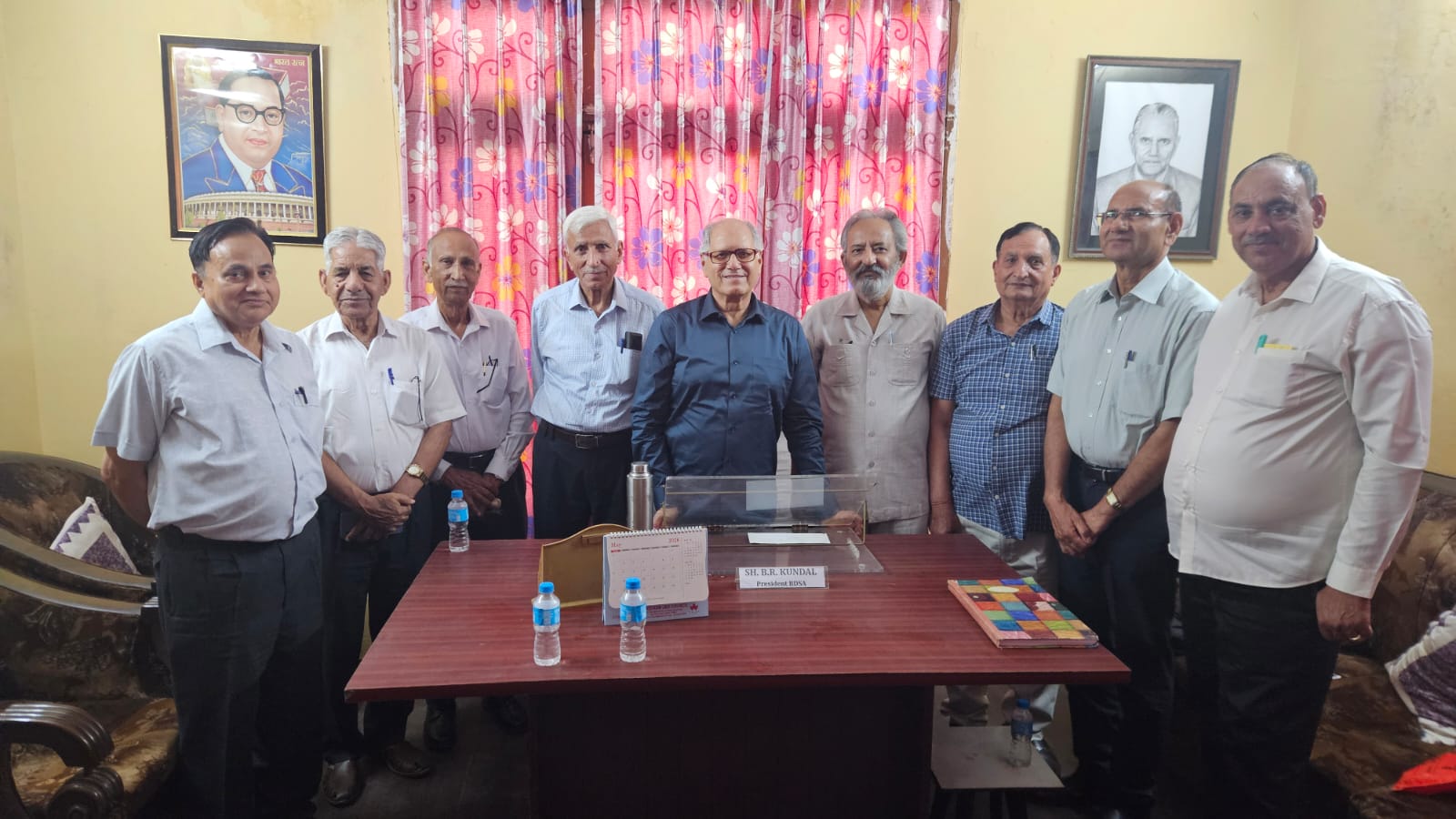
JAMMU, May 17: At a time when concerns over substance abuse among youth continue to mount across Jammu and Kashmir, the Bhartiya Dalit SahityaAkademi (BDSA) convened a focused discussion at its Roopnagar premises, signalling a renewed push for community-led intervention alongside government action. The meeting, chaired by B.R. Kundal (Retd. IAS) and President of BDSA, brought together senior members and intellectuals to deliberate on the growing crisis of drug addiction and its far-reaching social implications.
The deliberations reflected both urgency and introspection. Participants underscored that while recent government initiatives to spread awareness about drug abuse are commendable, they remain insufficient in addressing the deeper structural causes driving the crisis. Speakers underscored that though awareness campaigns are necessary, they must be complemented with sustained curative and rehabilitative measures. It was pointed out that increasing unemployment and social isolation increase the vulnerability of youth, pushing them toward substance abuse. The major concern was the easy accessibility of drugs that drew the sharpest concern. Speakers noted that without curbing supply chains and strengthening enforcement mechanisms, efforts to discourage demand would yield limited results.
Mr. Kundal, who led the discussion, stressed that drug abuse is not merely an individual failing but a societal challenge with cascading consequences. “It imposes a heavy physical and financial burden on affected individuals and their families,” he observed, calling for a broader understanding of addiction as a public health and socio-economic issue. His remarks framed the discussion in terms of both prevention and recovery, urging stakeholders to move beyond surface-level interventions.
Participants also expressed concern over the inadequate availability of quality de-addiction centres in the Union Territory. The lack of accessible and well-equipped rehabilitation facilities, they noted, leaves many affected individuals without meaningful avenues for recovery. In this context, the meeting called for significant investment in healthcare infrastructure dedicated to addiction treatment, alongside trained personnel capable of providing long-term support.
The discussion further highlighted the need to channel youthful energy into constructive pursuits. Encouraging participation in sports, cultural activities, and community engagement was seen as a vital preventive strategy. Members argued that such initiatives not only occupy time productively but also foster a sense of belonging and purpose—factors often missing in the lives of those drawn toward substance abuse.
In a set of concrete suggestions, Kundal proposed the establishment of a high-level commission to examine the root causes of drug abuse in the region. He advocated for an integrated approach involving key departments such as social welfare, anti-narcotics agencies, police, and educational institutions. Such a body, he said, could formulate targeted interventions and ensure coordinated implementation.
Equally significant was his emphasis on skill development and employment generation. Enhancing the employability of youth through government-backed programmes, he argued, would address one of the primary drivers of addiction. In addition, he suggested that affordable educational loans be made widely available to enable young people to pursue education and vocational training of their choice. “Empowering youth economically is central to preventing their drift toward destructive habits,” he noted.
The role of civil society organisations also came into focus during the meeting. Members resolved to initiate awareness programmes from the BDSA premises itself, aiming to sensitise communities about the dangers of drug abuse and the importance of early intervention. Mr. Kundal reiterated that BDSA stands ready to collaborate with government agencies in all possible ways to combat the menace.
The proceedings were conducted by R.L. Bhagat, a retired Joint Director from the Agriculture Department and a senior member of the Akademi, who facilitated a structured exchange of ideas among participants. The meeting concluded with a shared resolve to translate discussion into action, with follow-up initiatives expected in the coming weeks.
Others present on the occasion were Nagarmal, P. L. Bhushan, Rajesh Angural, Mohan Thappa, Sevadass Digra, S. D. Thappa, Mohan Lal Hans, Harbans Lal, Vijay Bhagat, Dr. Rakesh Kumar Atri besides others.