
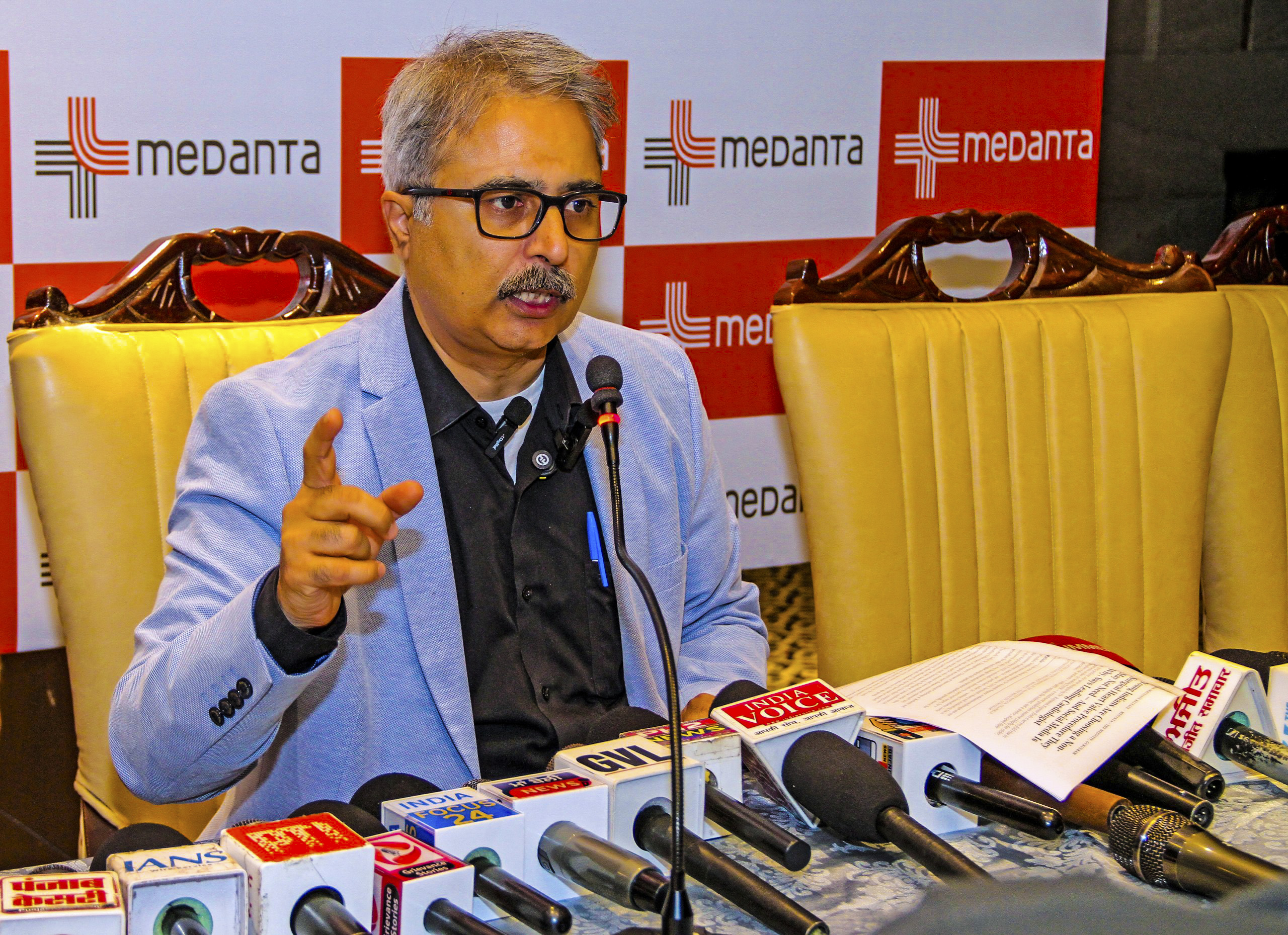
JAMMU / PATIALA, Jul 11: A six-year clinical study conducted by renowned interventional cardiologist Dr. Rajneesh Kapoor has revealed a significant rise in the number of younger Indians seeking Transcatheter Aortic Valve Replacement (TAVR)—a minimally invasive procedure used to treat severe aortic valve stenosis—even in cases where conventional open-heart surgery remains the medically recommended treatment.
Addressing a press conference in Patiala on Saturday, Dr. Kapoor, Chairman of Interventional Cardiology at Medanta and one of India’s leading TAVR specialists, said the study analysed 305 patients with severe aortic valve stenosis who were evaluated for valve replacement between 2020 and March 2026.
According to the study, patients aged 60 years and above accounted for 93 per cent of all cases evaluated between 2020 and 2024, while those in the 50–60 age group comprised 5 per cent and patients below 50 years just 1 per cent, reflecting the fact that severe aortic stenosis is primarily an age-related disease.
However, the trend changed significantly between 2024 and March 2026, with the proportion of patients under 60 increasing to 8–10 per cent of the total cases. The most striking increase was among patients below 50 years, whose numbers rose nearly seven-fold compared to the previous four-year period.
Dr. Kapoor said the findings suggest that an increasing number of younger, low-risk patients are actively requesting TAVR after being influenced by online content, despite international treatment guidelines generally recommending the procedure for older patients or those at high surgical risk.
To identify the source of patient awareness, researchers asked participants where they first learned about TAVR. Among patients below 50 years, 98 per cent cited the internet—including social media, video platforms, health websites and online forums—as their primary source of information rather than medical professionals.
“We have observed in our clinic, and this study substantiates it, that incomplete and incorrect information circulating on social media is now directly influencing healthcare decision-making by patients, sometimes against their own medical interest,” Dr. Kapoor said.
Explaining the condition, he said aortic stenosis is a narrowing of the heart’s aortic valve that restricts blood flow and is predominantly associated with ageing. While it affects around 2–3 per cent of people above 65 years and nearly 7 per cent of those over 80, severe cases in younger individuals are relatively uncommon and are usually linked to congenital heart defects rather than age-related valve degeneration.
Dr. Kapoor stressed that while increased public awareness of advanced medical treatments is welcome, patients should not rely solely on online information when making healthcare decisions.
“Our appeal to the public is simple: use the internet to ask better questions of your doctor—not to self-prescribe a procedure. The right treatment depends on your age, anatomy and risk profile and should always be decided in consultation with a specialist,” he said.