
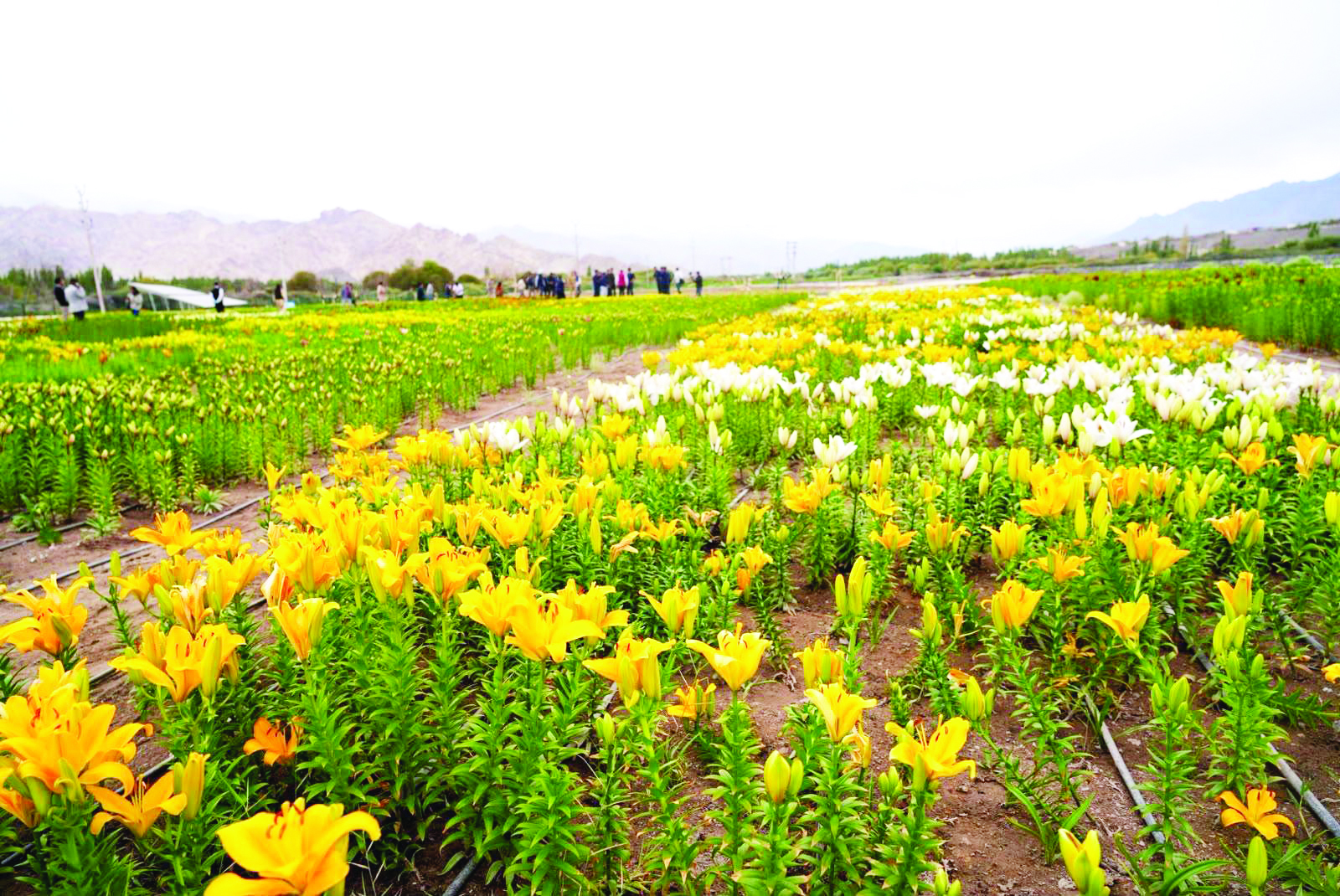
LEH, Sep 17: Lieutenant Governor of Ladakh, Vinai Kumar Saxena, on Thursday inaugurated the world’s highest-altitude twin flower fields at Choglamsar and Stakna in Leh, dedicating the facility to the people on the occasion of the 76th birth anniversary of Prime Minister Narendra Modi.
Situated at an altitude of around 10,600 feet, the two flower fields are described as the highest-altitude and among the largest flower cultivation projects of their kind in the country. Spread across approximately 40 acres, the fields have more than 25 lakh high-value flowers, including around 24 lakh Lilium and one lakh Gladiolus.
The initiative seeks to promote agricultural diversification, farmer empowerment and alternative livelihood opportunities through commercial floriculture in Ladakh. Officials said the high-altitude experiment could also provide a model for replicating similar floriculture projects in other parts of the Union Territory.
The Choglamsar flower field was developed in a short period of two months. Plantation began on July 16, with the first blooms appearing during the first week of September. At Stakna, plantation of nearly 14 lakh Liliums began in August, with the first blooms expected towards the end of October.
The project aims to utilise Ladakh’s distinctive climatic conditions and growing demand for high-value flowers in domestic and international markets. According to the administration, Lilium commands wholesale prices of around ₹60–70 per stick, with retail prices potentially higher.
The Choglamsar Flower Park will function as a demonstration and model floriculture centre where Lilium, Gladiolus, Tulips and other ornamental flowers will be cultivated. The facility is also intended to provide farmers and youth with practical exposure to scientific floriculture, modern cultivation methods and post-harvest management.
Under the initiative, the Agriculture Department will initially develop the flower fields and subsequently transfer them during the blooming period to selected Self-Help Groups (SHGs) and cooperative societies. The department will provide support in marketing the produce in national and international markets. From the following year, participating cooperatives are expected to undertake commercial cultivation, harvesting and value addition themselves.
Local farmers are also being provided structured training to develop floriculture as a viable commercial enterprise.
In his address, L-G Saxena said the initiative was aimed not only at introducing flower cultivation but also at creating new livelihoods, skills and economic opportunities for the people of Ladakh. He said the Flower Garden would serve as a training and demonstration centre while also providing recreational and educational opportunities for residents and tourists.
He highlighted floriculture as a high-value agricultural activity capable of complementing traditional farming and creating opportunities for income generation, employment and entrepreneurship.
The Flower Garden will be opened to the public from September 18, 2026. A nominal entry fee of Rs 25 for adults and ₹10 for children has been fixed, with the revenue earmarked for the maintenance and upkeep of the facility.