
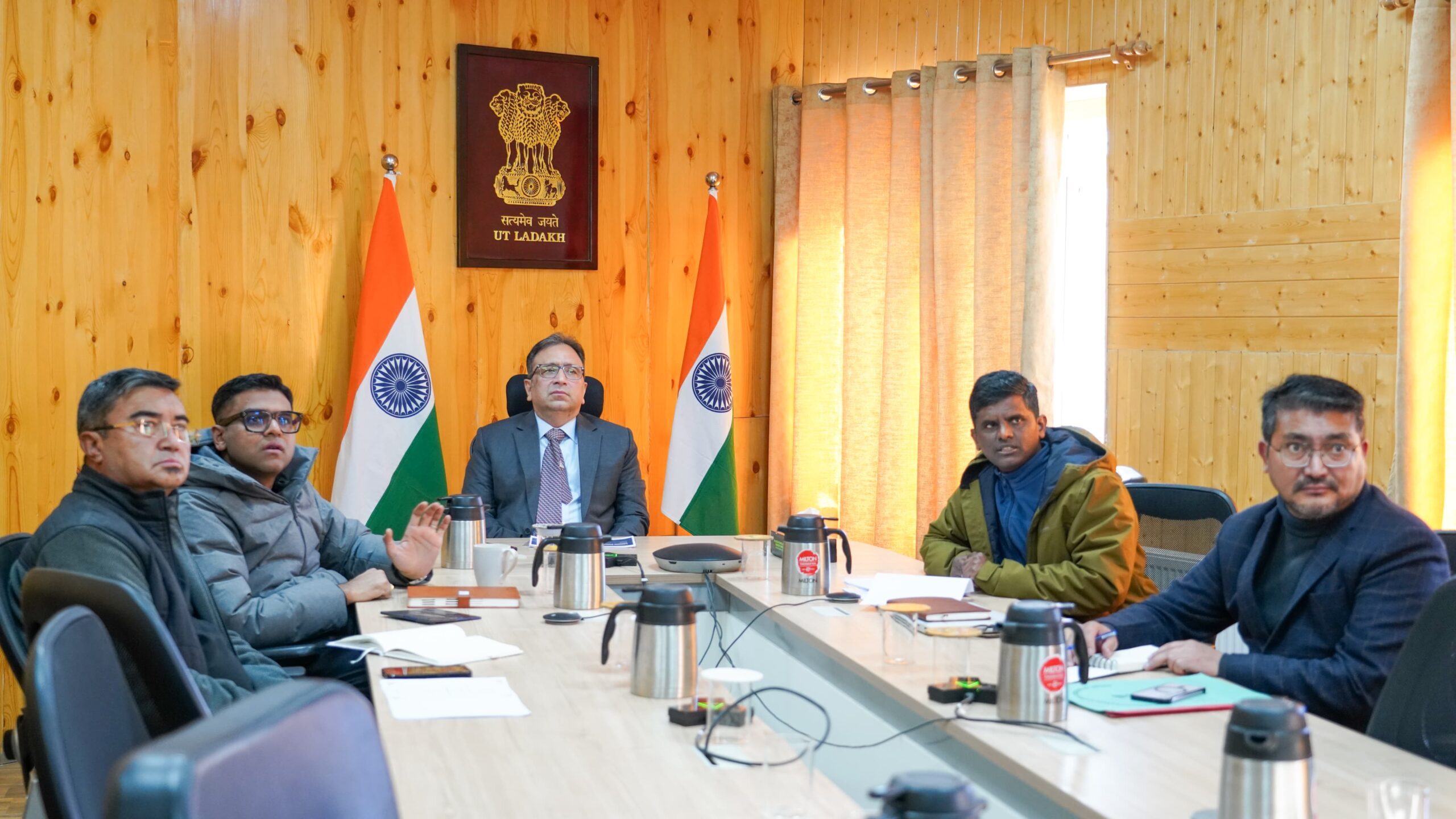
LEH, Oct 31: Chief Secretary, Union Territory of Ladakh, Ashish Kundra, today chaired a meeting to review the Electric Vehicle (EV) adoption framework in Ladakh, with a focus on expanding charging infrastructure, strengthening incentives for EV adoption and promoting sustainable mobility suited to the Union Territory’s geographical and climatic conditions.
During the meeting, Secretary, Transport Department, Arava Gopi Krishnan, presented an overview of the existing EV framework, highlighting its key provisions, incentives for EV adoption, charging infrastructure requirements and measures to accelerate the transition towards electric mobility. The discussion also covered the potential utilisation of pollution cess as a source for an EV transition fund and the integration of charging facilities at fuel outlets and other suitable locations.
The Chief Secretary examined the various aspects of EV adoption in detail and stressed the need for a data-driven approach. He called for a comprehensive assessment of the existing vehicle fleet, annual vehicle registrations, prices of electric and conventional vehicles, operating costs and availability of after-sales services. He emphasised that reliable data on private vehicles, commercial taxis and government fleets would be essential for developing practical incentives and a phased transition strategy.
The meeting discussed the development of a robust charging network across Leh, Kargil and other district headquarters, as well as at major tourist destinations and along key travel routes. The Chief Secretary stressed that charging infrastructure must account for Ladakh’s cold climate, long-distance travel requirements and remote locations. The availability of electricity, charging tariffs, existing charging points and the scope for solar-powered charging facilities were also examined.
The meeting further deliberated on the expansion of charging infrastructure under the Government of India’s PM E-DRIVE scheme and the need to explore complementary arrangements beyond the scheme.
The Chief Secretary called for an assessment of existing charging stations, their operational status and utilisation, along with the identification of priority locations for additional facilities. He also stressed the need to examine the role of public sector undertakings and other agencies in developing and operating charging infrastructure.
The transition of government vehicles and commercial transport to electric mobility was another key area of discussion. The Chief Secretary called for an assessment of the government vehicle fleet, including older vehicles, and examination of the feasibility of their phased replacement with electric vehicles. The meeting also discussed measures to encourage EV adoption among taxi operators, including consultations with transport stakeholders, assessment of commercial viability and availability of charging facilities before considering any transition-related requirements.
The meeting also reviewed existing incentives, subsidy delivery mechanisms and regulatory provisions, including digital disbursement of subsidies, vehicle registration data and applicable tax-related measures. The Chief Secretary emphasised the need for a transparent and efficient implementation framework, supported by clear eligibility criteria, reliable data and regular monitoring. He also called for greater public awareness regarding the benefits of electric mobility, operating costs and available incentives.
The Chief Secretary stressed that the EV adoption framework should provide a practical roadmap for cleaner transport while addressing the specific requirements of residents, commercial operators and tourists. He underscored the importance of coordination among the Transport Department, Power Development Department, district administrations and other stakeholders to ensure that charging infrastructure, electricity availability and EV adoption progress in tandem.
The meeting was attended by Secretary, Power Development Department, Himanshu Gupta; Secretary, Transport Department, Arava Gopi Krishnan; Officer on Special Duty to the Chief Secretary for Special Projects, Moses Kunzang; and other concerned officers and officials.