
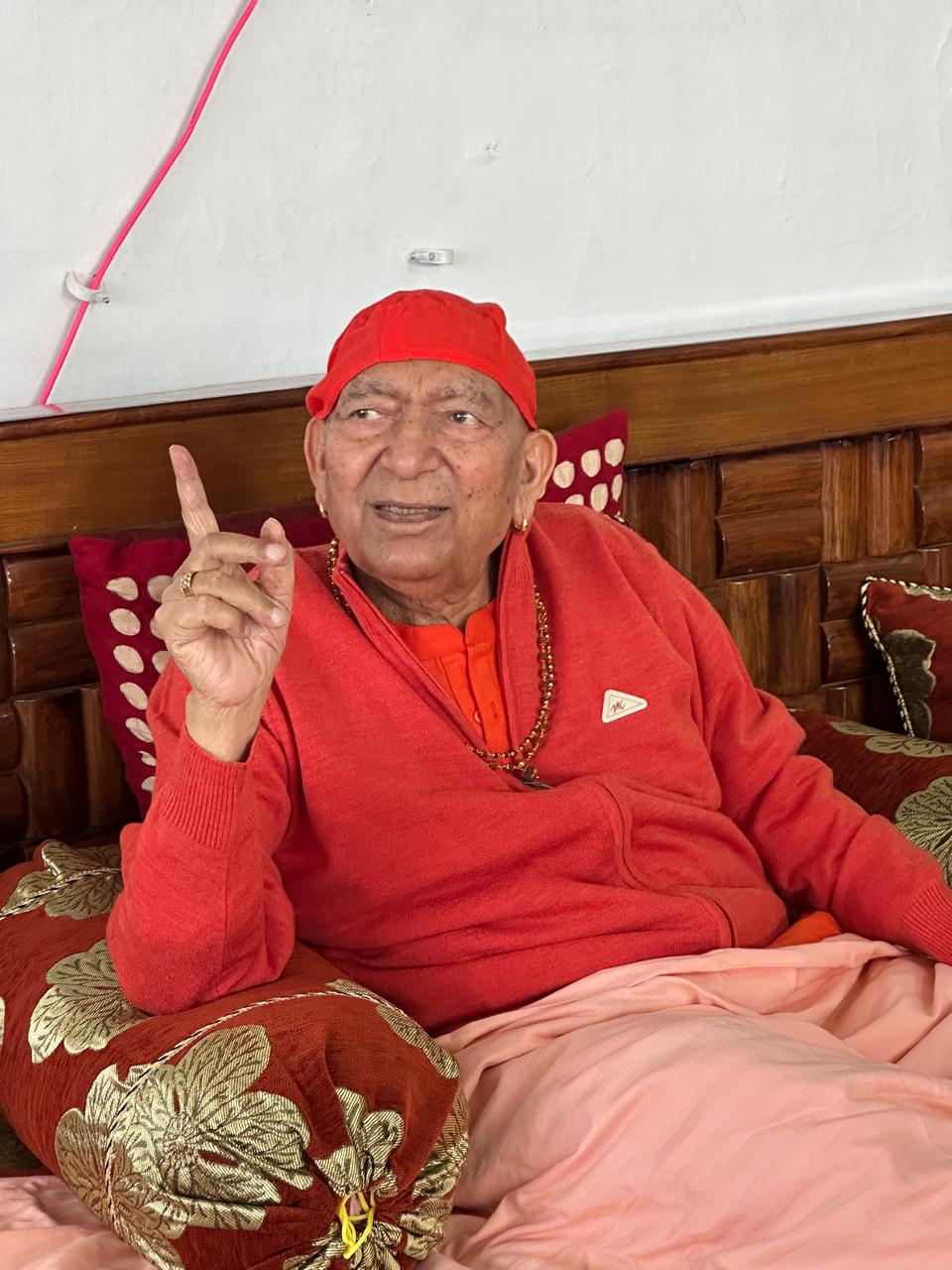
JAMMU / YOL, Jun 26: On the 76th day of the ongoing 78-day Yajna Anushthan of the four Vedas at Ved Mandir, Yol, Swami Ram Swaroop Ji, Yogacharya, delivered a spiritual discourse highlighting the significance of Ashtanga Yoga and Vedic teachings in attaining self-realisation and liberation.Quoting Atharvaveda Mantra 19/8/2, Swami Ji explained that the prayer, “Yogam Prapadye Kshemam Cha,” expresses the seeker’s aspiration to attain both Yoga (spiritual union with the Divine) and Kshem (well-being, protection and lasting peace).
Referring to Yajurveda Mantra 7/4, he said that God instructs every sincere seeker of spiritual knowledge to embrace the path of Yoga. He explained that the term “Upayam Grihitah Asi” signifies that a person is worthy of adopting the discipline of Yoga, particularly the eight limbs of Ashtanga Yoga described by Maharishi Patanjali in the Yoga Sutras (2/29)—Yama, Niyama, Asana, Pranayama, Pratyahara, Dharana, Dhyana and Samadhi.
Swami Ram Swaroop further explained that the same Vedic mantra emphasises the practice of Pranayama, or the control and regulation of the vital life force through disciplined breathing. Through regular practice of this sacred science, the restless tendencies of the mind are restrained and transformed from an outward focus to an inward spiritual orientation. This process gradually destroys ignorance and other inner impurities, enabling the soul to progress towards the realisation of the Supreme Being. He said that a true Yogi, through such disciplined practice, becomes worthy of the highest reverence.
He stressed that the study of the four Vedas teaches mankind to perform daily Agnihotra (Yajna), Naam Simran (remembrance of God’s name), and the disciplined practice of Ashtanga Yoga. By sincerely following this path, an individual attains the state of a Yogi, realises God, overcomes the accumulated sins and sufferings of countless births, and achieves Jeevan Mukti (liberation while living).
Concluding his discourse, Swami Ji cited Bhagavad Gita (Chapter 6, Verse 17), where Yogeshwar Shri Krishna declares, “Yogo Bhavati Duhkhaha,” meaning that the practice of Yoga ultimately brings an end to all forms of suffering. He urged devotees to incorporate Vedic wisdom and Yogic discipline into their daily lives to attain lasting peace, spiritual fulfilment and divine grace.