
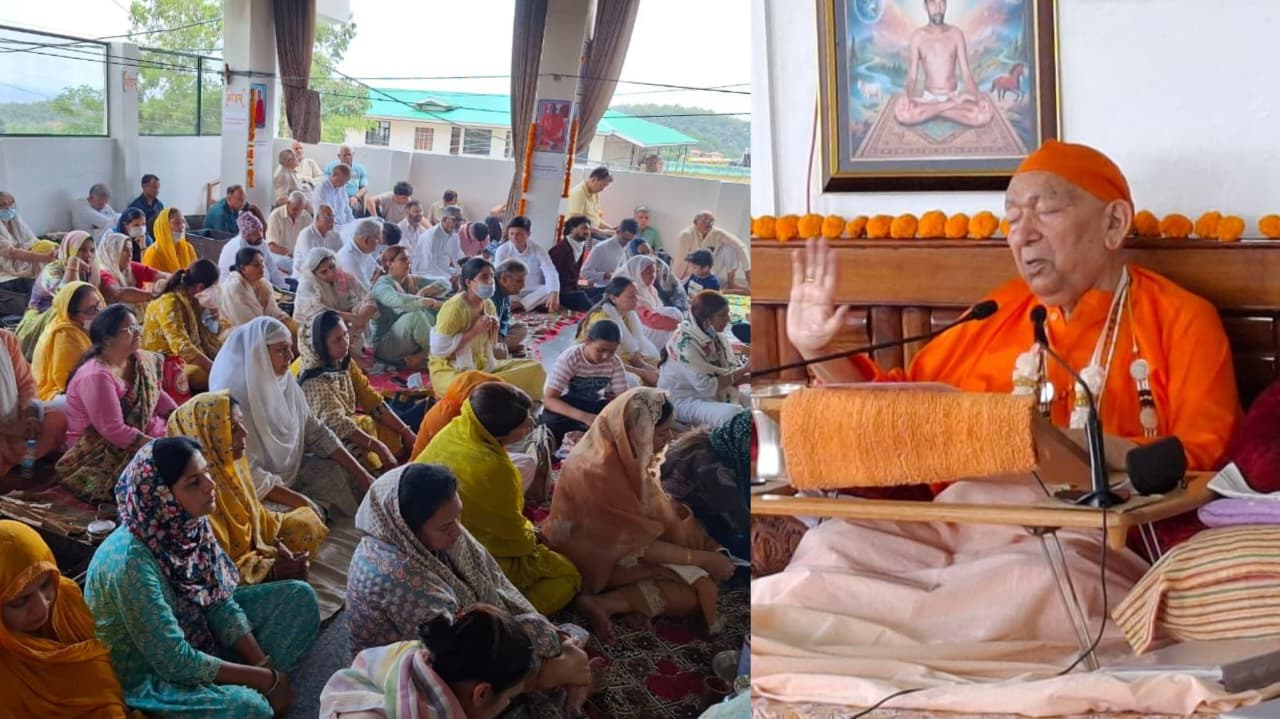
JAMMU/ YOL, Jun 24On the 74th day of the ongoing 78-day Yajna dedicated to all four Vedas at Ved Mandir, Yol, renowned Vedic scholar and Yogacharya Swami Ram Swarup Ji continued his discourse on Atharvaveda, Kanda 20, Sukta 96, emphasizing the significance of Agnihotra and Yajna in promoting health, well-being, and longevity.
Addressing devotees and seekers, Swami Ji explained that regardless of the number of ailments a person may suffer from, sincere participation in Agnihotra by offering ghee and sacred materials into the holy fire while reciting Vedic mantras contributes to the welfare of countless men, women, and children. He stated that Vedic teachings describe Agnihotra as a means of fostering a healthy life and enabling a person to live a full lifespan, symbolically referred to as “a hundred autumns.”
Quoting Atharvaveda, he said that Agnihotra and Yajna help create an environment conducive to physical, mental, and spiritual well-being. He encouraged devotees to approach learned scholars, listen to the Vedas, and understand the deeper spiritual and practical benefits of these ancient practices.
Swami Ram Swarup Ji further referred to Atharvaveda Mantra 20/96/13, explaining that the sacred vibrations and purity generated through Agnihotra are described in the Vedas as beneficial even for the well-being of a child developing in the womb. He said that the Vedic seers regarded Yajna as a powerful means of promoting harmony, health, and prosperity in society.
He urged people to study the divine knowledge of the Vedas, perform Yajna and Agnihotra with understanding and devotion, and adopt a disciplined lifestyle rooted in Vedic principles. According to him, such practices help individuals strive for a healthier and more meaningful life while strengthening family and social well-being.
Concluding his discourse, Swami Ji called upon society to reconnect with the timeless wisdom of the Vedas, stating that a return to Vedic values can help humanity address many of the challenges and sufferings prevalent in modern life. He emphasized that self-study of Vedic knowledge, combined with righteous action and Yajna, remains a path toward physical, mental, and spiritual upliftment.