
Says irregular water supply, non-functional systems and poor maintenance undermine Har Ghar Jal Mission
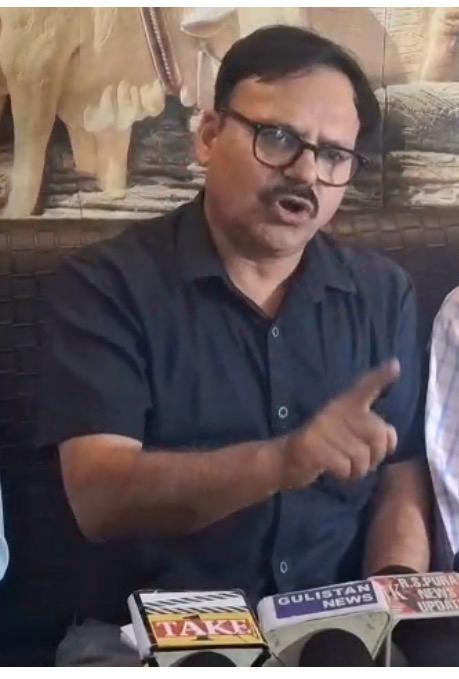
JAMMU, Jun 30: Renowned Human Rights Activist Om Parkash Khajuria has raised serious concern over what he described as uneven and incomplete implementation of the Government of India’s Jal Jeevan Mission (Har Ghar Jal) in rural areas of Jammu district. He said that while significant infrastructure has been created under the scheme—including installation of tube wells at the panchayat level and laying of extensive pipeline networks—many household water connections have either not been executed or remain pending despite physical readiness of the system. He further alleged that in several areas where connections have been provided, the systems are not being properly maintained, resulting in irregular and unreliable water supply.
Khajuria pointed out that the Government of India had set an ambitious target under the Jal Jeevan Mission to ensure that by January 2022, every Anganwadi centre, school, higher educational institution, and Primary Health Centre would have access to safe and adequate drinking water. However, he said that ground realities in several rural pockets of Jammu district indicate that this objective is still far from fully achieved.
He further stated that although infrastructure has been created, a large number of schemes are either non-functional or operating intermittently due to poor upkeep, lack of monitoring, and operational gaps. As a result, many households and public institutions continue to struggle for consistent access to potable water.
The activist also highlighted that during pipeline installation works, roads and streets were excavated in many areas, but restoration work has often been incomplete or substandard, leaving damaged public infrastructure and causing inconvenience to residents. A key concern raised by Khajuria is the heavy dependence of water supply systems on electricity. He said frequent and unscheduled power cuts directly affect the functioning of pumping stations and tube wells, leading to disruption in water supply and weakening the overall effectiveness of the mission.
He claimed that at present, only a limited proportion of rural panchayats are receiving consistent benefits under the scheme, while a significant number of villages continue to face irregular or inadequate water supply. Khajuria has urged the Ministry of Jal Shakti, the Jammu and Kashmir administration, and concerned implementing agencies to carry out a comprehensive audit of the scheme’s implementation. He demanded that all installed infrastructure be made fully functional, pending household connections be completed on priority, and damaged roads and public utilities be restored properly.
He also strongly recommended the installation of solar-powered backup systems at tube wells and pumping stations to ensure uninterrupted water supply during electricity failures. Emphasizing the importance of clean drinking water, he said that flagship public welfare schemes must be implemented in both letter and spirit so that benefits reach every intended household without delay or disparity.