
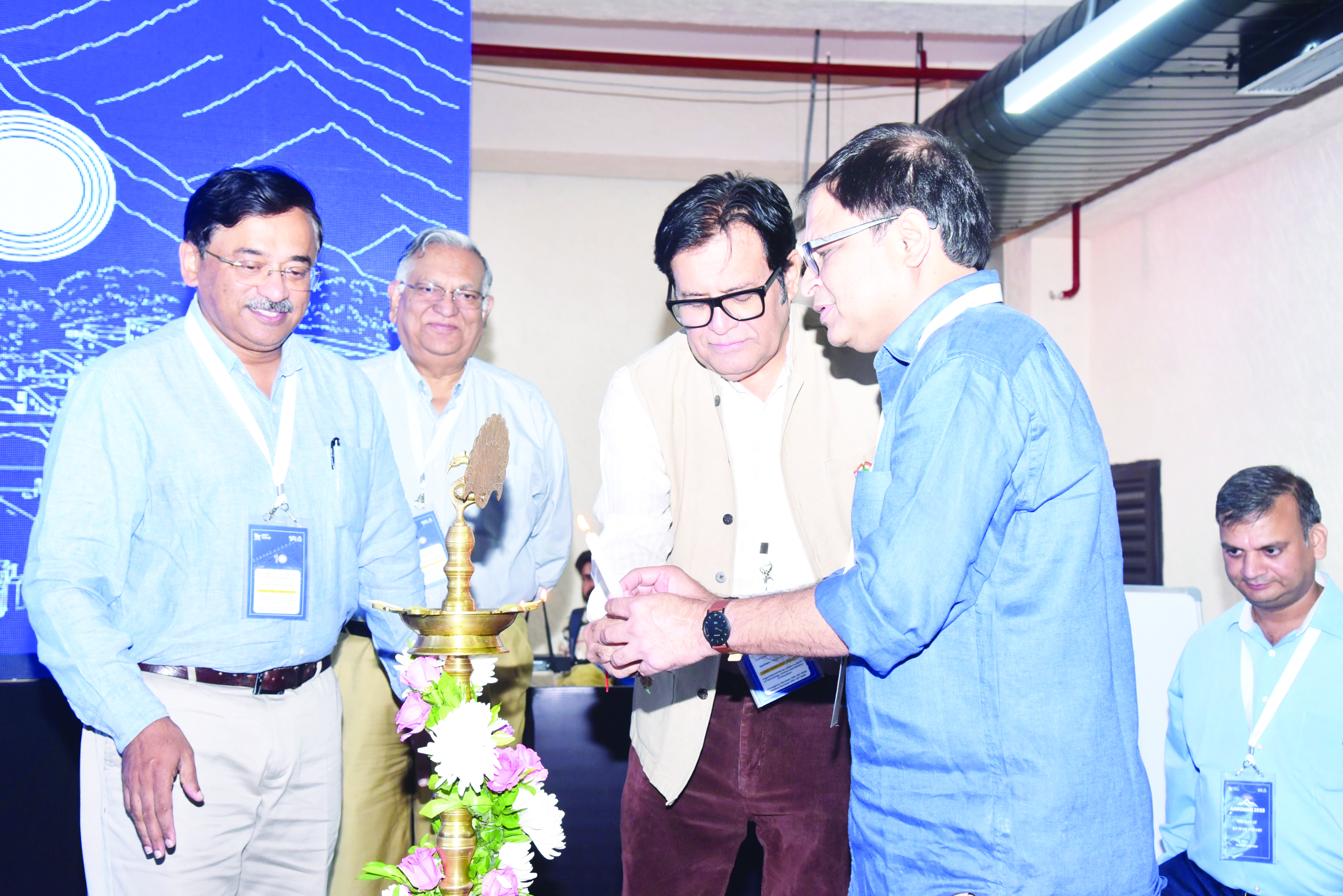
JAMMU, Oct 27: The Indian Institute of Technology Jammu, in collaboration with the Department of Higher Education, Ministry of Education, Government of India, organised Aarohan 2026: Building Resilient, Inclusive and Future-ready Campuses, a two-day Regional Capacity Building Workshop on Positive Mental Health, Resilience and Wellbeing. The programme was conducted under the Teacher Connect Programme of the Malaviya Mission Teacher Training Programme 2.0.
The workshop brought together distinguished academicians, education administrators, mental health professionals and experts to deliberate on strengthening student wellbeing and fostering sustainable, inclusive and supportive campus environments across higher education institutions. It aimed to translate policy perspectives and institutional experiences into practical measures to promote students’ mental, physical, social and residential wellbeing.
The inaugural session featured addresses by the Chief Guest, Prof. Sudhir Kumar Jain, former Director of IIT Gandhinagar and former Vice-Chancellor of Banaras Hindu University, and Prof. Manoj Singh Gaur, Director, IIT Jammu. The session also included a welcome address by Prof. Sanat Tiwari and a vote of thanks by Prof. Anup Shukla, Dean (Student Affairs), IIT Jammu.
Emphasising the importance of student wellbeing in higher education, Prof. Gaur said, “Student wellbeing is integral to academic excellence and the overall development of a higher education institution. Through Aarohan 2026, we aim to strengthen institutional practices that foster resilience, inclusion and a supportive campus environment where every student can thrive.”
Highlighting the importance of collective institutional responsibility, Prof. Jain said, “Building resilient and inclusive campuses requires a collective commitment to student mental health and wellbeing. Initiatives such as Aarohan 2026 provide an important platform for sharing knowledge and developing practical approaches to creating more supportive learning environments across higher education institutions.”
The first day focused on understanding student wellbeing and institutional responsibilities. Discussions covered supportive learning environments, Ministry of Education initiatives to promote positive mental health, and the implementation of wellbeing frameworks at the institutional level. An expert session also showcased IIT Jammu’s approach to student wellbeing, highlighting its institutional framework, counselling and support services, referral mechanisms, and the roles of faculty, residential staff and students in fostering a supportive campus ecosystem.
The programme featured panel discussions on strengthening social belonging, reducing the stigma associated with seeking help, and enabling the early identification of student distress. Experts also discussed preventive approaches to lifestyle-related health concerns, including nutrition and physical activity. A hands-on workshop on life skills-based peer mentoring and socio-emotional partnerships further explored ways to strengthen peer support among students. A guided visit to student hostels and dining facilities enabled delegates to interact with wardens, mess managers, caretakers and students and exchange experiences on residential wellbeing practices.
The second day focused on building sustainable campus wellbeing ecosystems. Sessions addressed the identification of specific learning disabilities, the prevention of substance use, the integration of wellbeing and life skills into curricula, and the potential of indigenous knowledge, research, innovation and technology to promote holistic wellbeing. Discussions also explored humanistic leadership, inclusive teaching practices and evidence-informed, context-sensitive approaches to student support.
The workshop featured contributions from Shri Devendra Kumar Sharma, Department of Higher Education, Ministry of Education; Prof. Pragati Kumar, Vice-Chancellor of Shri Mata Vaishno Devi University (SMVDU), Katra; Prof. Jaison A. Manjaly of IIT Gandhinagar; Prof. Debi Prasad Mishra of IIT Kanpur; Dr. Varsha Singh of IIT Delhi; Dr. Amitash Ojha of IIT Jammu; Dr. Romesh Kumar, Head of the District Institute of Education and Training, Jammu; Dr. Jitendra Nagpal of Moolchand Medicity and Expressions India; Dr. Saamdu Chetri of the Rekhi Foundation for Happiness; Dr. Zubeda Tumbi, Nutritionist at HealthWatch Nutrition Clinic, Mumbai; Dr. Sunayana Swain of the Tata Institute of Social Sciences, Hyderabad; and Dr. Rushi of the All India Institute of Speech and Hearing, Mysore. Experts and representatives from the Ministry of Education and other educational institutions also contributed to the deliberations.
A key component of Aarohan 2026 was the concluding institutional action-planning exercise, which was designed to help participating institutions develop time-bound student wellbeing plans outlining priority actions, responsible institutional representatives, implementation milestones and review schedules. The programme also introduced the University / Institution Wellness Indicators Checklist (UWIC) as a framework for institutional self-assessment, monitoring and periodic reporting. These measures are intended to support sustained institutional engagement and follow-up with the Department of Higher Education.
The two-day workshop concluded with a vote of thanks by Nandita Sharma, Institute Counsellor, IIT Jammu.
Through Aarohan 2026, IIT Jammu underscored the importance of integrating student wellbeing into institutional policies, academic practices and campus governance. The workshop highlighted the need for sustained collaboration, early intervention and inclusive learning environments to build resilient, future-ready higher education institutions where every student has the opportunity to learn, grow and thrive.