
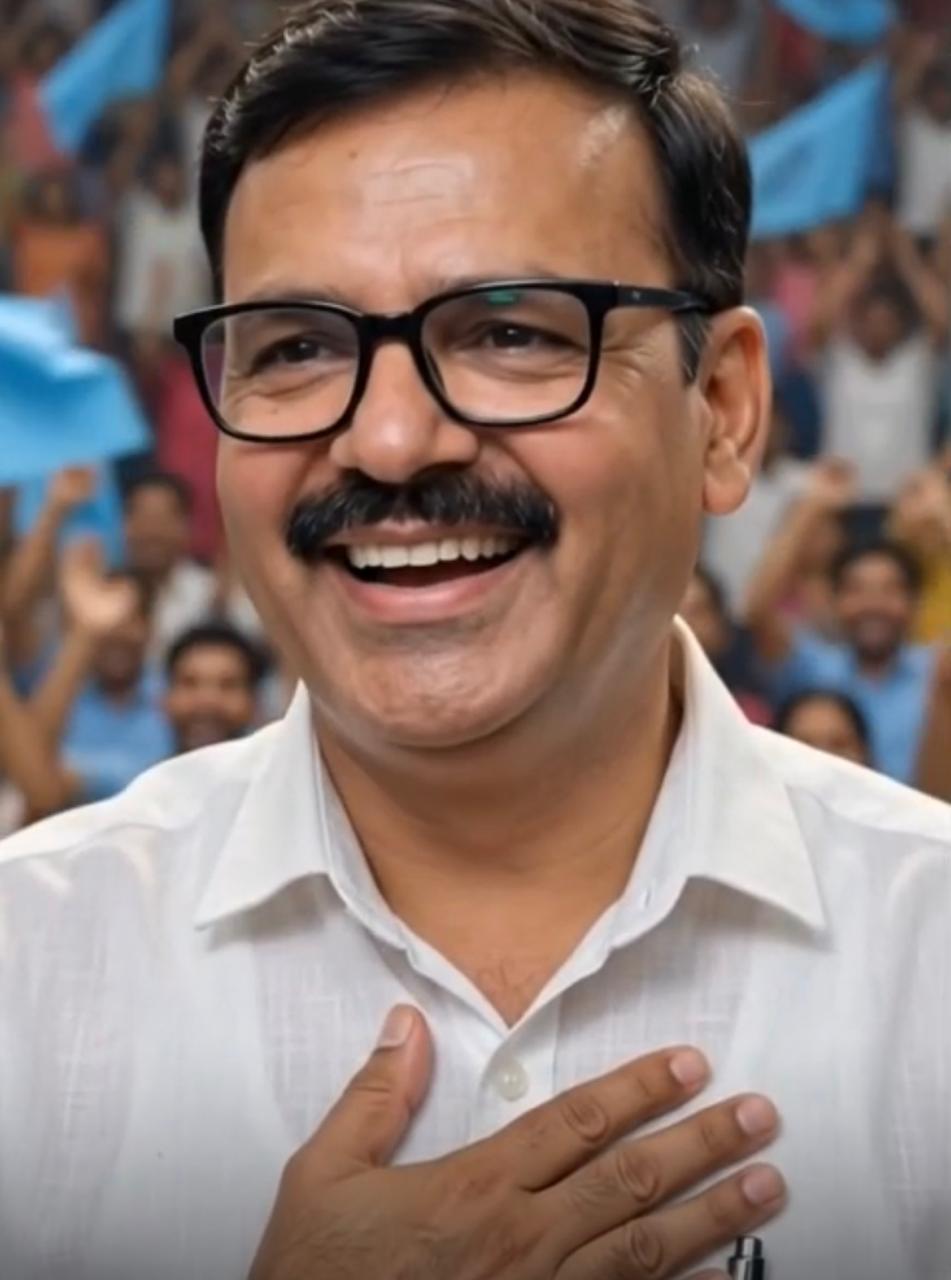
JAMMU, Jun 13: Prominent human rights activist Om Parkash Khajuria has welcomed the recent statement of former Chief Minister Dr. Farooq Abdullah seeking intervention of United Nations Human Rights Commission regarding the situation in Pakistan-occupied Jammu and Kashmir (POJK), but at the same time questioned what he termed as the “selective approach” towards human rights issues affecting refugees, displaced persons and marginalized communities within Jammu and Kashmir.
Khajuria, who himself belongs to a family displaced from POJK following the 1947 tribal invasion backed by Pakistan, said the people residing in POJK are an inseparable part of the larger Jammu and Kashmir family and deserve justice, dignity, democratic freedoms and basic human rights.”We share common cultural, linguistic and historical bonds besides ethnicity with the people living in POJK. Their aspirations for justice and dignity cannot be ignored. However, the concern for human rights should not be selective or politically convenient. It must be universal and inclusive,” Khajuria said.
While appreciating Abdullah’s concern for the people living under Pakistan’s occupation, Khajuria asked why successive political leaderships, particularly those who ruled Jammu and Kashmir for decades, remained silent on the plight of thousands of displaced families who have spent generations waiting for justice, rehabilitation, resettlement and recognition.He recalled that the Pakistan-sponsored tribal invasion of 1947 resulted in one of the largest genocide in the world at that time, leading to the brutal killing of thousands of innocent Hindus and Sikhs and forcing lakhs of people to flee their ancestral homes in areas now under Pakistan’s occupation.
“More than seven decades have passed, yet many displaced families continue to struggle for adequate rehabilitation, ownership rights, political representation and socio-economic justice and they still reside in so called refugee camps and old railway line. If human rights are important in POJK today, why were the rights of these displaced families overlooked for decades?” he asked. Khajuria pointed out that while 24 Assembly seats continue to remain reserved for areas under Pakistan’s illegal occupation, the long-standing demand of POJK displaced persons for meaningful political representation within Jammu and Kashmir has not received the attention it deserves.
Expressing concern over the condition of refugee families, he said many displaced persons are still living in difficult circumstances and continue to face uncertainty regarding land ownership and permanent rehabilitation. He particularly highlighted the plight of several displaced families residing along the old Jammu-Sialkot railway corridor, where, according to him, many continue to live in inadequate and unhygienic conditions without access to basic civic amenities and secure ownership rights.
The human rights activist also raised the issue of West Pakistani Refugees, stating that they too suffered decades of discrimination and denial of rights despite contributing significantly to the socio-economic development of the region.Khajuria further emphasized the need to address concerns of other displaced communities, including issues related to recognition, certification and recognition of Pahari-speaking people in districts such as Jammu and Kathua.
Reaffirming that the entire erstwhile State of Jammu and Kashmir, including POJK, is an integral part of India, Khajuria said solidarity with the people living under Pakistan’s occupation should go hand in hand with justice for those who were displaced and neglected within the Indian side of Jammu and Kashmir. “Human rights are universal. Justice, dignity, equality and democratic rights cannot be confined to geography or political narratives. Every victim of displacement, discrimination and neglect deserves equal attention and equal justice,” he asserted.
Calling for a balanced and comprehensive human rights discourse, Khajuria urged all political parties and public representatives to rise above selective politics and sincerely address the concerns of POJK displaced persons, West Pakistani Refugees and all those who have suffered historical injustice. “True commitment to human rights is reflected not in selective statements but in standing with every deprived and displaced family seeking justice, dignity and recognition,” he added.