
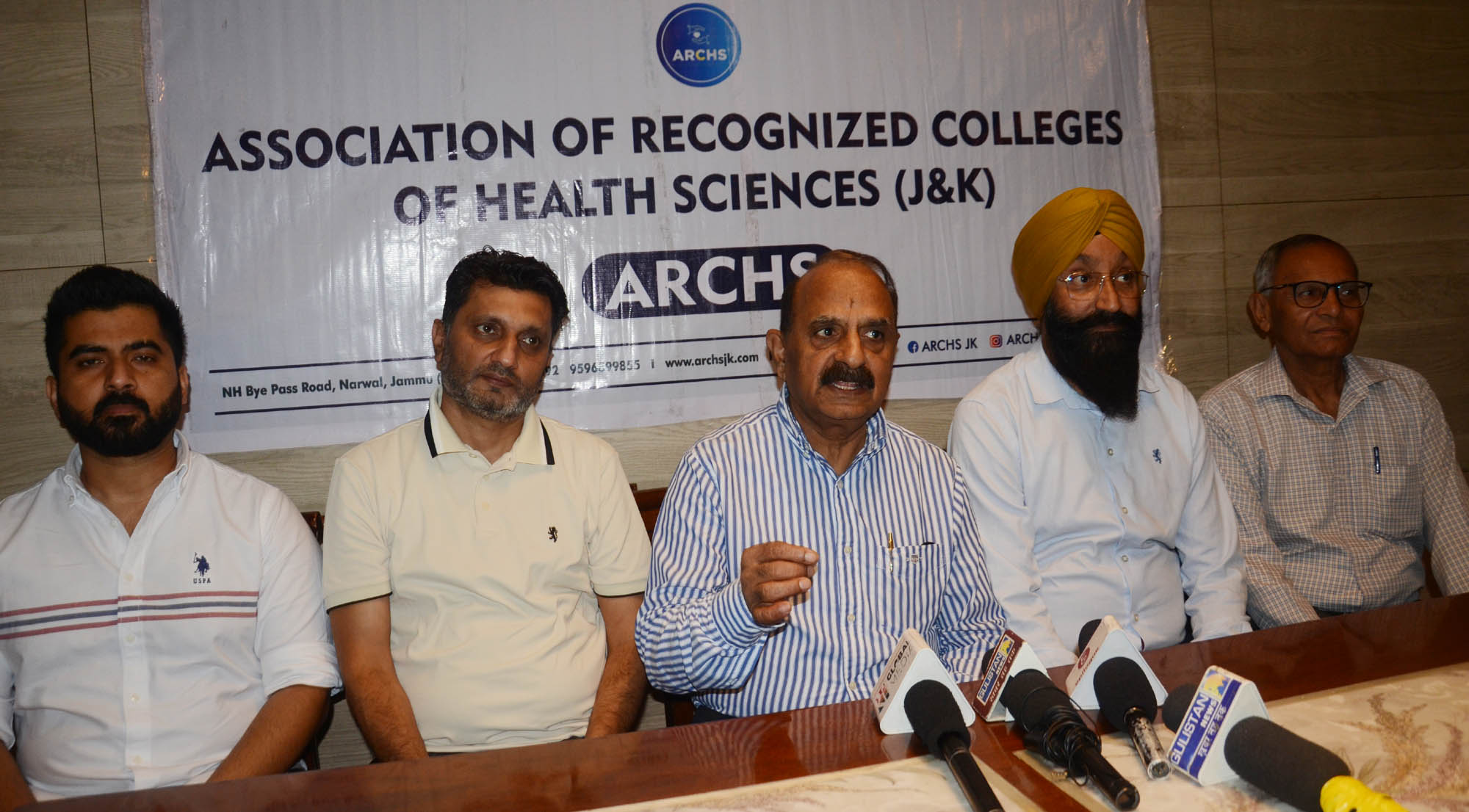
JAMMU, Oct 18: The Association of Recognized Colleges of Health Sciences Institutions (ARCHS) held a press conference to highlight long-pending issues affecting private unaided nursing, pharmacy and allied health institutions across Jammu and Kashmir, urging the authorities to take timely measures to ensure the sustainable growth of health sciences education in the Union Territory.
The press conference was addressed by ARCHS President M.S. Katoch and other members of the association, who stressed that private unaided institutions play an important role in developing skilled healthcare professionals, supplementing public education infrastructure and creating employment opportunities for qualified youth.
At the outset, the association congratulated the J&K Pharmacy Council on being entrusted with the responsibility of the Examining Authority. The members expressed hope that the development would strengthen the examination system and ensure the timely conduct of examinations and declaration of results.
Addressing the gathering, M.S. Katoch highlighted several critical issues concerning the functioning, financial sustainability and future prospects of private healthcare education institutions.
One of the major demands raised by the association was the waiving of domicile restrictions for admission to pharmacy and other healthcare courses in Jammu and Kashmir. Katoch urged the competent authorities to reconsider the existing restrictions, pointing out that students from outside the Union Territory were being admitted to other institutions where admissions were not processed through the Jammu and Kashmir Board of Professional Entrance Examinations (BOPEE).
He also highlighted the difficulties faced by students from Ladakh who have completed their Class 10 and Class 12 examinations through the Jammu and Kashmir Board of School Education but are reportedly unable to secure admission to private colleges in J&K for the concerned courses. The association further pointed out that children of Central Government employees serving in different sectors in Jammu and Kashmir were also being deprived of such opportunities.
According to the association, these restrictions were not applicable to institutions offering similar programmes before the abrogation of Article 370. It maintained that the existing barriers limited educational opportunities for students and affected the interests of institutions seeking to attract eligible candidates from different regions.
Another major concern raised during the conference was the prolonged non-revision of the fee structure for private unaided institutions, which the association said was last revised in 2018.
The members explained that operational costs had increased substantially since the last revision, including faculty salaries, infrastructure maintenance, laboratory equipment, clinical training facilities, utilities, statutory compliance and other academic requirements.
Katoch emphasised that maintaining quality professional education required adequate financial resources to ensure modern laboratories, sufficient faculty strength, improved infrastructure and essential student facilities. He urged the authorities to undertake an immediate review of the existing fee structure and approve a need-based revision after considering inflation, actual operational expenditure and the requirements of regulatory bodies.
The association stressed that a balanced fee policy was necessary to protect students’ interests while ensuring the long-term sustainability of institutions and maintaining the quality of professional education in the region.
The members reiterated the need for constructive engagement with the concerned authorities to resolve the pending issues and create a supportive environment for healthcare education in Jammu and Kashmir.
Those present at the press conference included Dr. Sukhpreet Singh, Dr. Akash, Dr. Madhu Sudan, Abhimanyu Katoch, Dr. Tariq Dev, Puran Chand Sharma, Ayush Katoch and Dr. Irfan Ahmed, along with ARCHS President M.S. Katoch.