
Construct Yatra route only in consultation with environmentalists and religious leaders
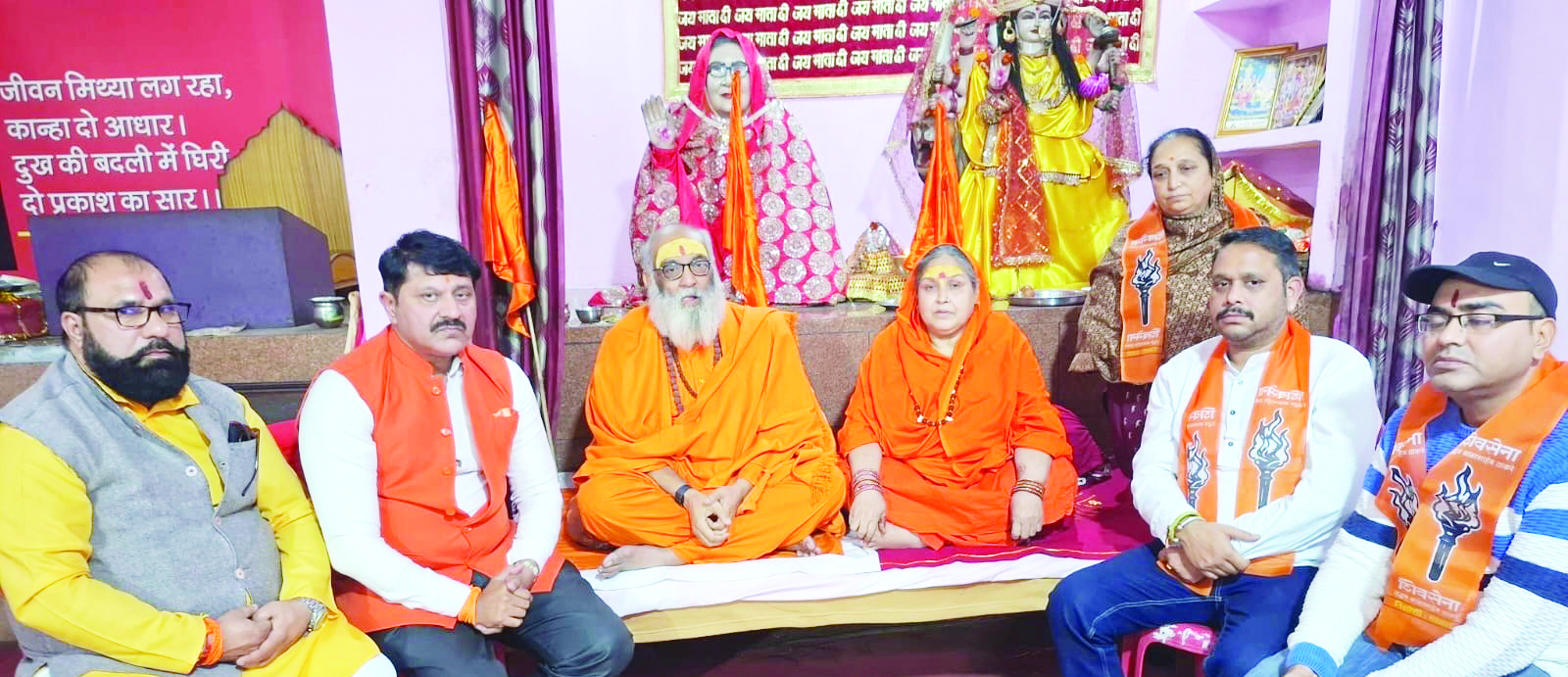
KATRA, Nov 28: On the auspicious occasion of upcoming Mahashivratri (March 6, 2027), a grand, historic first ‘Chhari Yatra’ (holy mace pilgrimage) will be flagged off from Jammu to the ancient Shankaracharya Temple in Srinagar. Guided by Swami Rajeshwaranand Rajguru Ji Maharaj, Head of the Shri Rajmata Jhandewala Temple Group, and led by Manish Sahni, State Chief of Shiv Sena (Uddhav Balasaheb Thackeray), a caravan of devotees will embark on this sacred journey to Kashmir.
The formal announcement was made jointly by Swami Rajeshwaranand Ji and Manish Sahni following prayers on the third day of a four-day Satsang ritual at Shri Rajmata Ji Ashram Shani Mandir in Katra. Addressing a gathering of eminent citizens, Swami Rajeshwaranand emphasized that lasting peace is achievable only through religious unity. Extending an open invitation to all sects and communities, he stated that this pilgrimage will set a benchmark for interfaith harmony, national integration, and mutual brotherhood in the Valley.
During their joint address, the leaders noted that initiated under the guidance of Shiv Sena (UBT) chief Uddhav Balasaheb Thackeray, this yatra is an extension of Shiv Sena’s 43-year-old unbroken tradition of leading the annual Chhari Yatra to Mata Vaishno Devi. Held annually from 2027 onward, the pilgrimage will send a strong message globally that Jammu & Kashmir is rapidly advancing toward peace, tourism, and communal harmony. The organizers have appealed to the Lieutenant Governor’s administration for necessary permissions to ensure smooth conduct and urged devotees and locals to join the campaign in large numbers.
On this occasion Guru Mata , Sanjay Bhatt , Raju Kapoor , Aditya Mahajan were also present.
Speaking to reporters, Swami Rajeshwaranand Ji and Manish Sahni expressed grave concern over heavy machinery excavation near the sacred Sheshnag Lake along the Shri Amarnath Yatra route. They urged the Central Government to ensure that road widening does not harm the fragile Himalayan ecosystem or the lake’s mythological sanctity, recommending that route construction proceed strictly in consultation with environmentalists and religious scholars to protect both faith and nature.