
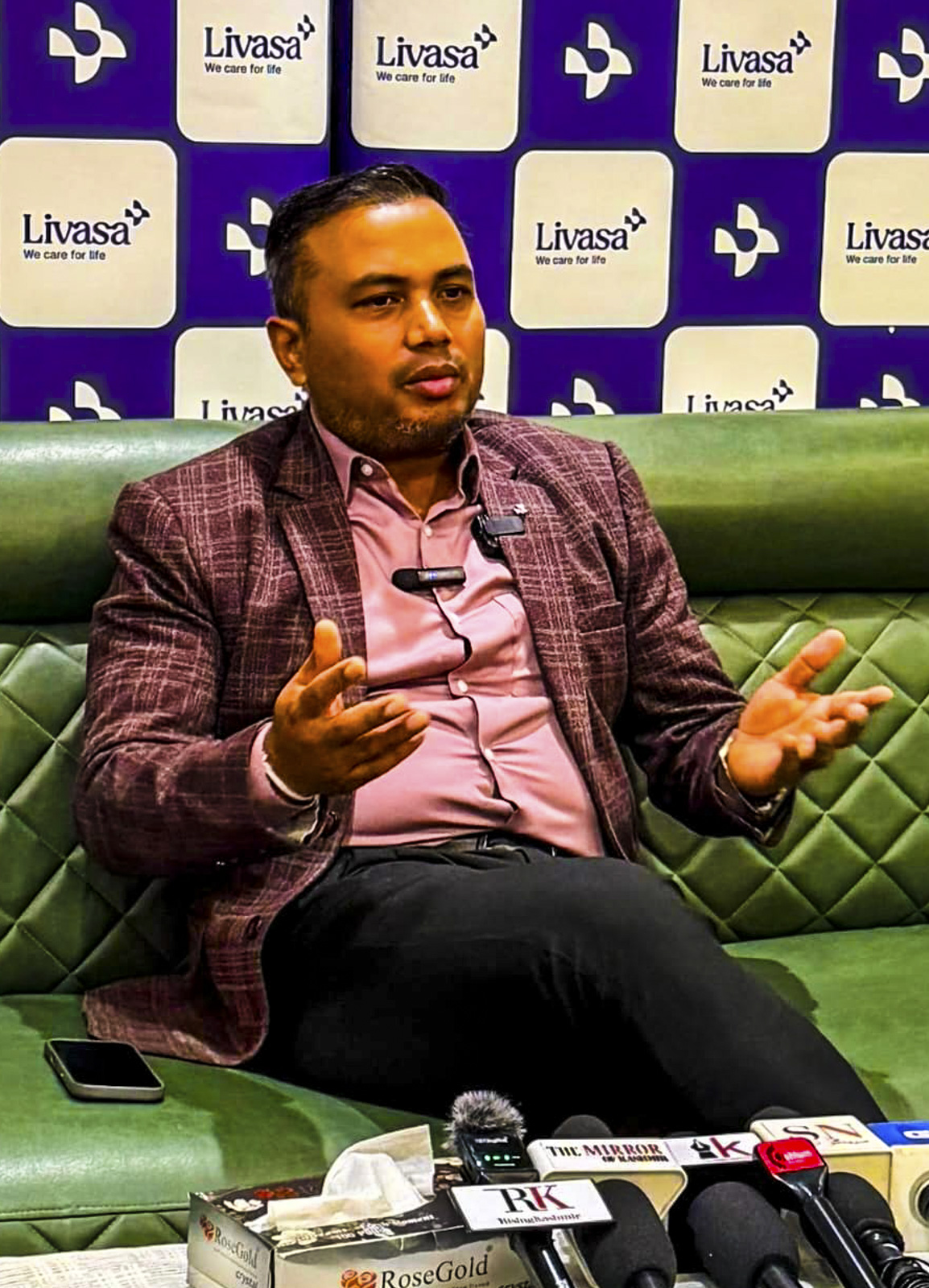
SRINAGAR, Oct 26: Two patients from Srinagar and Anantnag have regained mobility and improved their quality of life following the successful treatment of complex spinal conditions at Livasa Hospital, Mohali.
Addressing a press conference in Srinagar on Monday, Dr. Ajay Singh, Brain and Spine Specialist at Livasa Hospital, Mohali, shared details of the two challenging cases, highlighting the importance of specialised surgical expertise, individualised treatment planning and timely medical intervention in managing complex spinal disorders.
The first case involved a patient from Srinagar who developed a severe spinal infection complicated by sepsis following an earlier surgery. His condition deteriorated significantly, leaving him unable to sit, stand or even turn in bed. With his mobility severely compromised, he was brought to Livasa Hospital, Mohali, on a stretcher for further treatment.
After a detailed evaluation, Dr. Ajay Singh performed revision spine surgery to address the complex infection and manage the associated spinal complications. The procedure required meticulous surgical planning, followed by close postoperative monitoring to support the patient’s recovery.
The patient showed encouraging improvement, regaining mobility by the second day after surgery. He is now doing well and remains under medical observation, with regular outpatient follow-up to monitor his continued recovery.
The second case involved a 21-year-old woman from Anantnag who was diagnosed with Grade III–IV dysplastic spondylolisthesis, a severe spinal condition that significantly affected her ability to sit and stand comfortably. Given that her father is a farmer, the cost of treatment was also an important consideration for the family.
Following a comprehensive assessment, Dr. Ajay Singh planned a hybrid posterolateral surgical approach to correct and stabilise the spine, while avoiding the need for a more extensive circumferential procedure. The approach was tailored to the patient’s clinical condition, with consideration given to the family’s financial circumstances.
Approximately nine to ten months after surgery, the young woman is doing well and has returned to her normal routine. Her recovery underscores the importance of personalised surgical strategies that balance clinical requirements with practical considerations, including affordability.
Both cases demonstrate the role of specialised spine care and carefully planned surgical interventions in helping patients with complex spinal conditions regain mobility and improve their quality of life. They also highlight the importance of tailoring treatment to each patient’s medical needs and individual circumstances.