
Vote Chor NC and Congress set Kashmir on fire in 1987; KPs Exodus & Decades of Bloodshed
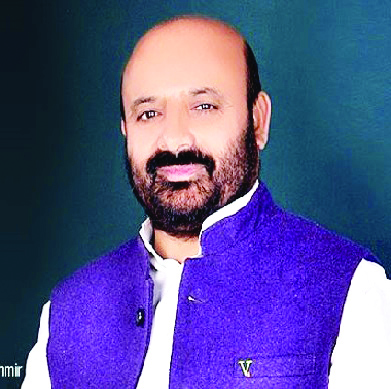
JAMMU, Oct 26: Senior BJP leader and former minister Bali Bhagat has launched a blistering attack on National Conference president Farooq Abdullah over his latest remarks concerning Pakistan, accusing him of repeatedly echoing a narrative that, according to Bhagat, disregards Jammu and Kashmir’s painful history of terrorism, displacement and bloodshed.
Reacting sharply to Abdullah’s reported remarks about Pakistan’s role in keeping the Kashmir issue alive internationally, Bhagat questioned how Pakistan could be portrayed as a well-wisher of Kashmiris when the region has endured decades of militancy and violence.
“If Farooq Abdullah is so impressed with Pakistan and its narrative, he should go there instead of repeatedly making statements that strengthen its arguments. Jammu and Kashmir is an integral part of India, and its people deserve leaders who stand firmly with their interests, security and dignity,” Bhagat said.
He accused Abdullah of overlooking the suffering of terrorism victims while making statements that, in his assessment, provide political ammunition to Pakistan. Bhagat maintained that political disagreement with the Centre is legitimate in a democracy, but public representatives must remain conscious of the consequences of their statements on national security and public sentiment.
Bhagat also invoked the controversial 1987 Jammu and Kashmir Assembly elections, when Farooq Abdullah’s National Conference and the Congress contested together following the Rajiv Gandhi–Farooq Abdullah understanding. The alliance won 66 of the 76 seats, with 40 going to the NC and 26 to Congress.
The election was followed by widespread allegations of rigging, manipulated counting and arrests of opposition candidates and workers. The Muslim United Front (MUF), which had emerged as a significant political challenger, won four seats amid serious disputes over the electoral process.
Bhagat argued that the controversy remains a painful chapter in Kashmir’s democratic history and contributed to growing political alienation. Mohammad Yusuf Shah, associated with the MUF, later became known as Syed Salahuddin, a militant leader. Yasin Malik, who was the polling agent of Mohd Yusaf Shah subsequently became involved in militancy and separatist politics.
The 1987 election is widely regarded as one factor behind the subsequent insurgency, although the rise of militancy also involved other political and cross-border factors due to “ Vote Chori” of NC and Congress.
Bhagat further highlighted the mass exodus of Kashmiri Pandits during the rise of militancy around 1989–90. Threats, targeted killings and widespread insecurity forced large numbers of families to abandon their ancestral homes, temples, livelihoods and cultural roots.
“The Kashmiri Pandit exodus was a human tragedy that can never be erased from our collective memory. Families were uprooted, innocent people were killed, and generations suffered. Their pain cannot be ignored while discussing Kashmir’s political future,” Bhagat asserted.
The senior BJP leader said that Farooq Abdullah is responsible for exodus of five lac Kashmiri Hindus and for killing of more than 45,000 people so far.
It was Farooq Abdullah who set Kashmir on fire at the behest of Pakistan and fled to London.
Bhagat also raised the historical controversy surrounding Abdullah’s reported 1974 visit to Muzaffarabad in Pakistan-occupied Kashmir and photographs reportedly published in 1984 showing him sharing a platform with Amanullah Khan, later associated with the Jammu and Kashmir Liberation Front. He argued that Abdullah’s political history and public statements deserve scrutiny.
Concluding his attack, Bhagat said, “Pakistan is no saviour of Kashmir. The people of Jammu and Kashmir want peace, development, security and dignity—not political narratives that overlook their suffering. Farooq Abdullah must explain how his latest remarks serve the interests of the people he claims to represent.”
Bhagat maintained that Kashmir’s future must be built on national security, democratic accountability, justice for terrorism victims and lasting peace for every community.