
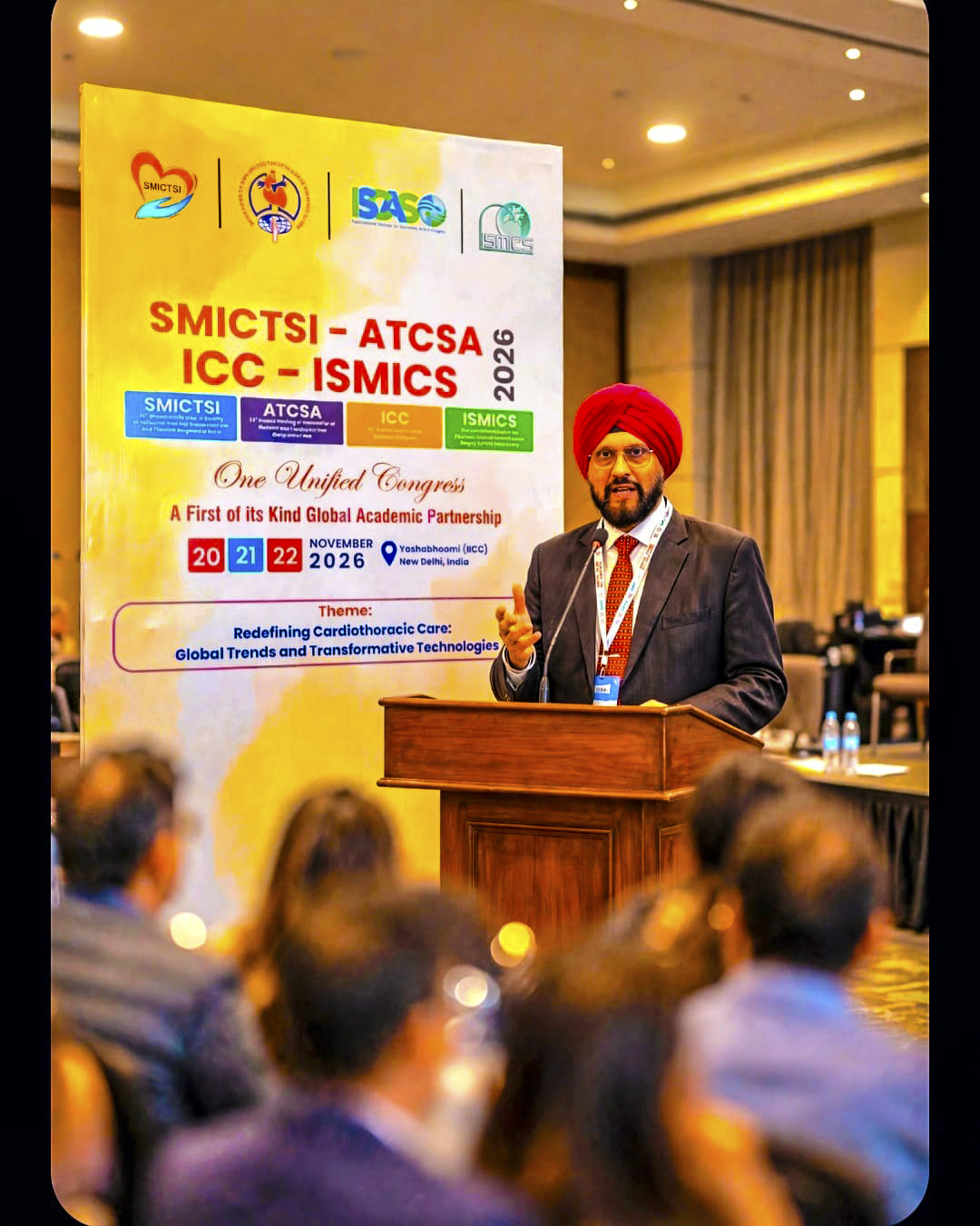
JAMMU / CHANDIGARH, Nov 25: Dr. Harinder Singh Bedi, Chairman – Department of Cardiothoracic and Vascular Surgery at Shalby Hospital, Mohali, presented a surgical technique for aortic annulus enlargement at an international conference in New Delhi, highlighting an additional surgical approach for selected patients undergoing aortic valve replacement.
The conference brought together leading cardiovascular specialists under the aegis of the Society of Minimally Invasive Cardiovascular and Thoracic Surgeons of India, the Association of Thoracic and Cardiovascular Surgeons of Asia, the International Coronary Congress, and the International Society for Minimally Invasive Cardiothoracic Surgery.
Dr. Bedi’s presentation focused on a technique for aortic annulus enlargement in selected patients with a diseased aortic valve and a relatively small valve annulus—the anatomical structure that serves as the seating area for the replacement valve. In such cases, enlargement of the annulus may help facilitate implantation of an appropriately sized prosthetic valve.
The technique was presented as an additional surgical option that may be considered in carefully selected patients alongside established annular-enlargement procedures. The choice of surgical approach and valve size depends on several factors, including the patient’s anatomy, nature of valve disease, heart function, previous surgeries, overall clinical condition and multidisciplinary heart-team assessment.
Aortic valve replacement remains an established treatment for patients with severe aortic valve disease when indicated. However, annulus-enlargement procedures require careful patient selection, comprehensive preoperative assessment and specialised surgical expertise. Like all cardiac surgeries, these procedures carry risks, and outcomes depend on individual patient factors and clinical circumstances.
Dr. Bedi said the technique could offer an additional option in selected cases, subject to individual patient assessment, informed consent, institutional protocols and established professional standards.