
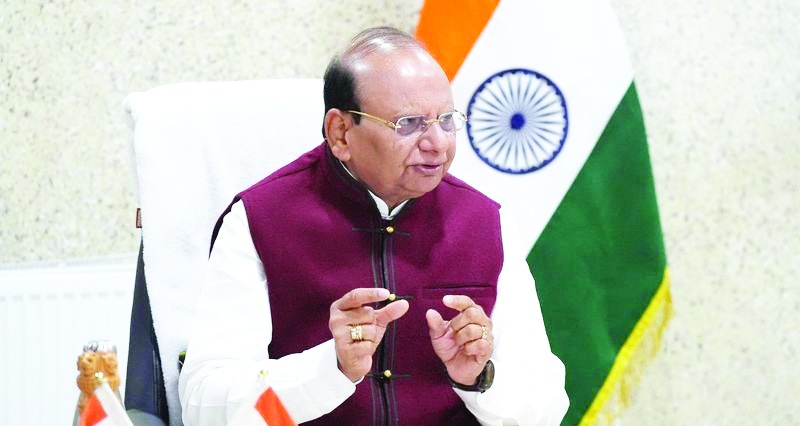
LEH/JAMMU, Nov 15: Ladakh Lieutenant Governor Vinai Kumar Saxena has approved 97 additional water bodies under Project Amrit Sarovar, taking the total number of ponds slated for operationalisation across the Union Territory to 163 by January next year, an official said on Sunday.
As winter sets in across the high-altitude cold desert, the administration is turning the harsh season into an opportunity to accelerate water conservation efforts, strengthen climate resilience, ensure reliable irrigation and safeguard rural livelihoods, the official said.
He said the administration has accelerated Project Amrit Sarovar, with the Lt Governor granting approval for the construction of 97 new water bodies under Project Amrit Sarovar in Ladakh.
“This strategic initiative is designed to combat climate change, secure agricultural water supplies, and drive rural sustainability in mission mode, during the peak winter months,” the official said.
He said the Lt Governor has recently granted approval for the creation of 97 additional ponds across the Union Territory and directed the Public Health Engineering department and authorities to complete these works in mission mode by January 31, 2027.
“This rapid execution will result in a total of 163 ponds getting operationalised by January 2027. This will cover 163 out of 248 villages across Ladakh in just 10 months, with a collective storage capacity of nearly 550 million litres of water.
No Prosecution For Previously-Enrolled Voters Filing Form 6: EC To SC’
“These 163 ponds will ensure that water scarcity does not disrupt the upcoming sowing season in March and irrigation water is available locally to the farmers,” the official said.
Building upon the successful operationalisation of 60 water bodies over the past seven months, he said work on six ongoing water bodies in Leh and Kargil is scheduled for completion by December 15 this year. Out of these 60 water bodies, 40 were inaugurated by Prime Minister Narendra Modi on October 15.
The development assumes greater significance in the wake of an acute water crisis in at least 50 to 60 villages in Ladakh, including several villages in Kargil, where people are forced to abandon their villages and migrate to other places due to the unavailability of water, the official said.
Designed using advanced scientific methods tailored to Ladakh’s fragile climatic conditions, Project Amrit Sarovar goes beyond immediate irrigation needs.
“It provides reliable water for agricultural fields, generates sustainable livelihood opportunities for local communities, and serves the broader national goal of land degradation neutrality by aligning directly with Prime Minister’s vision of restoring 2.6 crore hectares of degraded land by 2030,” the official said.
By turning peak winter challenges into an opportunity for proactive resource management, he said Ladakh is setting a historic benchmark in climate resilience and water security.
Project Amrit Sarovar was conceived by Saxena and launched on April 10. The project has received a great response from the local villagers and Nambardars, who have played an instrumental role in the construction of the water bodies and their operations.
With their active participation, this project has emerged as a successful community-led initiative suited the local needs, the official said.
The official said that with decreasing winter snowfall, receding glaciers, rising temperatures, and depleting water tables posing severe threats to the fragile ecosystem, Project Amrit Sarovar serves as a vital scientific intervention.
The project directly addresses the irrigation challenges faced by local farmers for whom water is a lifeline, aiming to conserve precious rainwater and annual snow melt that would otherwise go to waste, he said.