
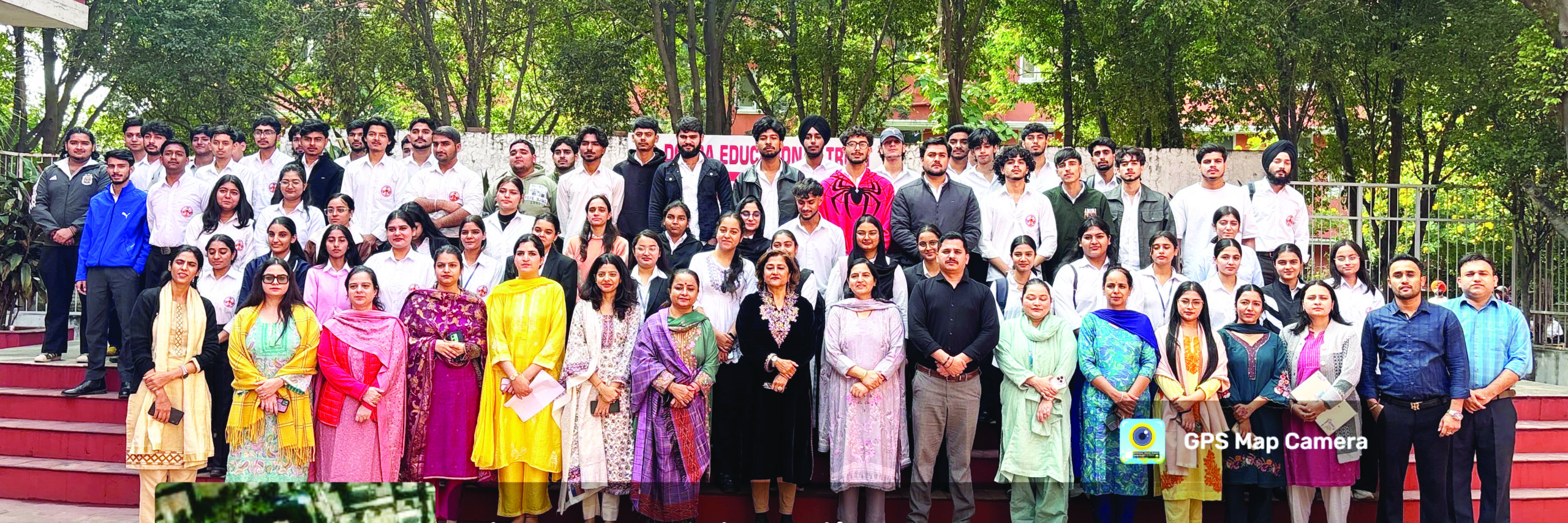
JAMMU, Nov 13: Dogra Degree College (Autonomous), Bari Brahmana, organised an interactive session on Gender Sensitization at the auditorium of Dogra Educational Complex for students of B.A., B.Com. and BBA, with the objective of promoting gender equality, awareness and an inclusive social outlook.
The session was conducted by Prof. (Dr.) Kavita Suri from the Department of Lifelong Learning, University of Jammu, who engaged students in a meaningful discussion on gender roles, women’s rights and the need to build a society based on equality and mutual respect.
Beginning with the distinction between sex and gender, Prof. Suri explained how family, society, education and culture influence perceptions of gender roles. Through everyday examples, she highlighted common stereotypes related to household responsibilities, professions and social expectations. She also discussed the changing position of women in Indian society and the contribution of women’s rights movements towards achieving political, social and cultural equality.
The discussion further addressed challenges faced by women in representation, opportunities and decision-making. Issues such as unequal access to resources, the division of public and private spaces, and the multiple responsibilities shouldered by women were also highlighted. Students were introduced to the difference between gender equality and gender equity, with emphasis on recognising individual circumstances to ensure fairness.
The programme was attended by Dr. Bela Thakur, Director, DGC and Principal, Dogra Degree College; Balwant Singh, Programme In-charge, B.A.; and Rakesh Mohan Koul, Programme In-charge, BBA/B.Com.
An important focus of the session was encouraging students to examine their own attitudes and challenge conventional gender stereotypes. They were urged to respect individual identities and abilities rather than judge people through traditional expectations associated with men and women.
The session concluded with the message that gender sensitization begins with individual awareness and positive changes in everyday behaviour. It emphasised that genuine equality requires more than policies and legislation; it must be reflected in daily interactions through dignity, fairness and mutual respect.