
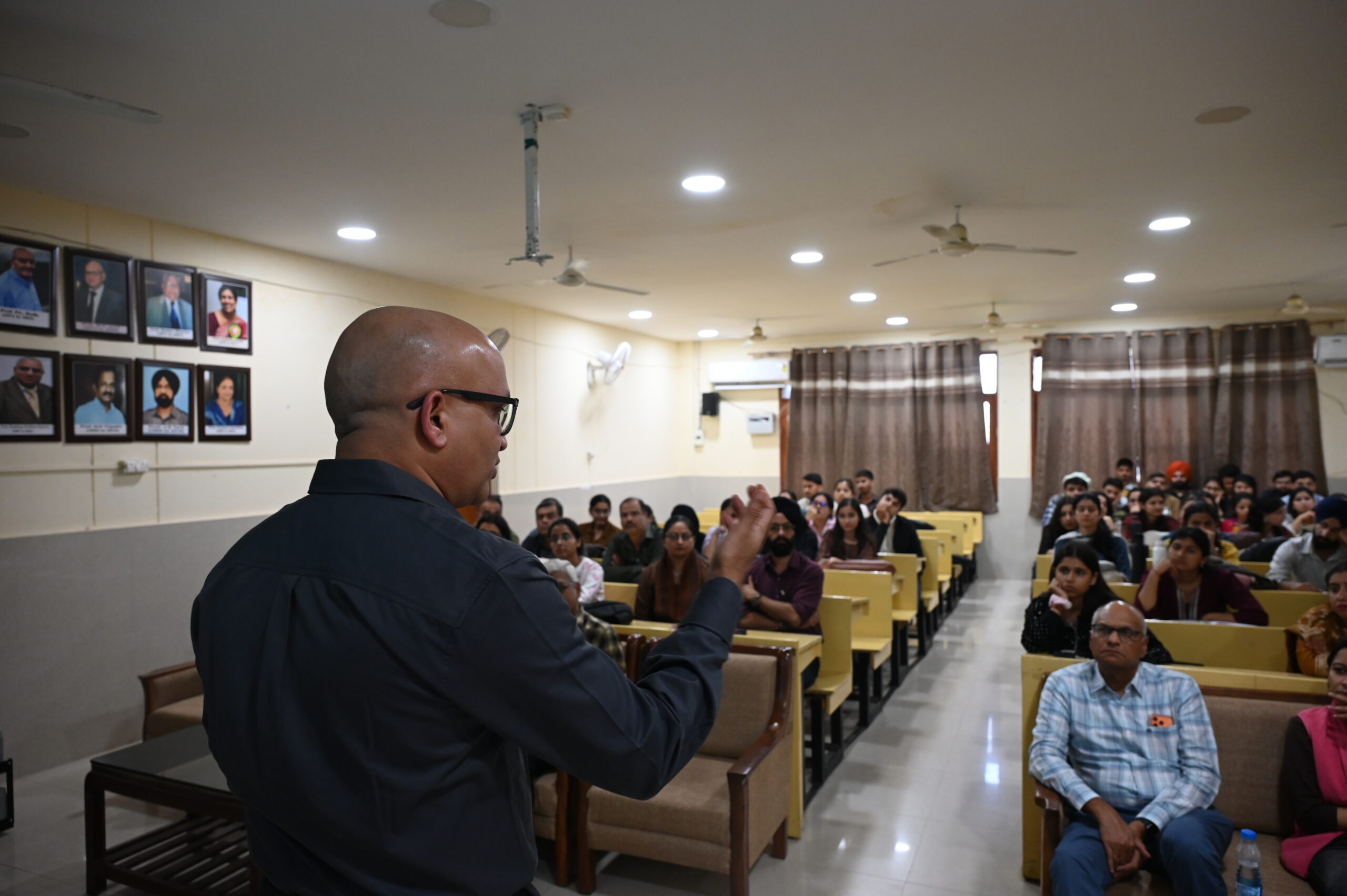
JAMMU, Nov 5: The Department of Zoology, in collaboration with the University Science Instrumentation Centre (USIC), University of Jammu, organized an insightful postgraduate teaching lectures and a research seminar by Prof. Suraj Unniappan, Professor and Centennial Enhancement Chair in Comparative Endocrinology at the University of Saskatchewan, Canada.
Appreciating the proactive approach of the department of Zoology and USIC, Prof. Umesh Rai, Vice Chancellor, University of Jammu, acknowledged that such initiatives strengthen the teaching and research aptitude of the students.
He said that such international academic exchanges provide great exposure to the students and scholars, inspiring them to explore emerging areas of scientific inquiry.
Earlier, in his research seminar, Prof. Unniappan discussed the discovery of new hormones and their roles in regulating metabolism. He presented findings on nesfatin-1 and nesfatin-1-like peptide, two emerging peptide hormones with diverse physiological functions, focusing on their involvement in metabolic regulation.
He highlighted the implications of these findings for understanding obesity and disorders of lipid metabolism, including obesity and liver diseases. The presentation introduced participants to research examining how these hormones influence metabolic processes and how their study may contribute to a better understanding of metabolic disease.
Prof. Unniappan also delivered two lectures for M.Sc. students, connecting fundamental concepts in endocrinology with their relevance to health and disease. In the first lecture, he explained how the brain regulates the pituitary gland, an organ responsible for producing several important hormones.
He discussed the functions and regulation of pituitary hormones and outlined disorders associated with their excessive or insufficient production. In the second lecture, he focused on gastric and pancreatic hormones and their roles in regulating blood glucose, food intake and body weight.
He explained the significance of these hormones in maintaining metabolic balance and discussed their relevance to diabetes and obesity. The teaching sessions helped students relate the regulation of hormone secretion to the coordination of physiological functions. Alongside the research seminar, they provided an opportunity to connect postgraduate coursework with ongoing investigations into the endocrine basis of metabolic disorders.
The programme was attended by Head, Department of Zoology; Director, USIC; faculty members, research scholars and staff from the Departments of Zoology, Botany, Environmental Science, Biotechnology and USIC, along with postgraduate students.
The sessions concluded with an interactive discussion, during which students and faculty members raised questions on hormonal regulation and metabolic health. Prof. Unniappan responded to their queries and clarified concepts discussed during the programme.
Dr Sarabjeet Kour, Associate Professor, Department of Zoology, welcomed the resource person and participants and proposed the formal vote of thanks.