
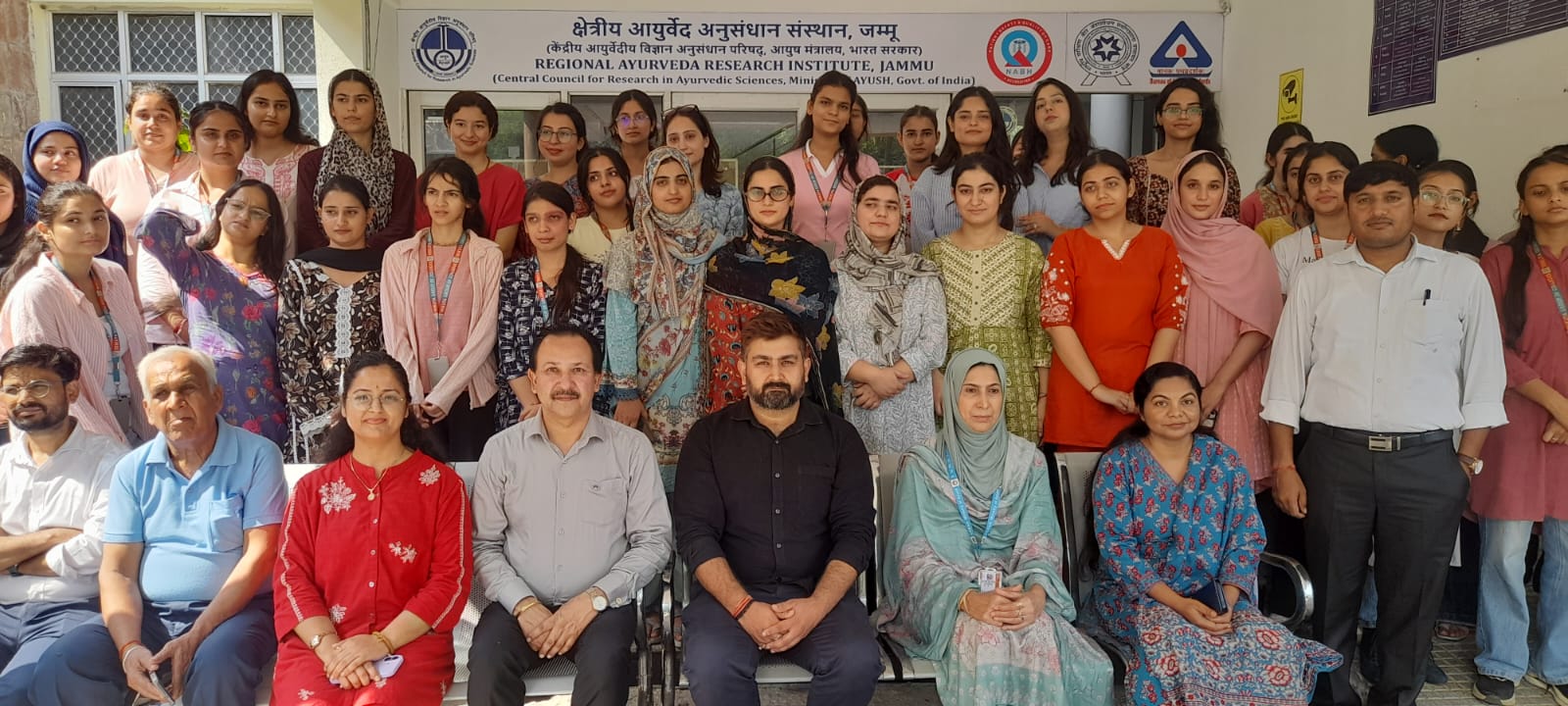
JAMMU, Sep 22: The Regional Ayurveda Research Institute (RARI), Jammu, organised a seminar on “Health Research Fundamentals” for Ayurveda students and young researchers on Monday as part of activities leading up to the 11th Ayurveda Day, to be observed on September 23.
The programme aimed to strengthen research aptitude among emerging Ayurveda scholars and promote a systematic and evidence-based approach to research in traditional medicine. The seminar focused on equipping students and young researchers with essential skills required to undertake scientifically sound and ethically responsible research.
Experts discussed key aspects of health research methodology, including clinical research design, biostatistics, research ethics, scientific writing and the integration of traditional Ayurvedic knowledge with contemporary research methods.
Addressing the participants, Dr Harbans Singh, Head of Institution, RARI Jammu, said the future development of Ayurveda depends on robust, transparent and ethically sound research. He emphasised the need to equip students and young researchers with fundamental research skills so that evidence generated through Ayurveda research can meet national and international scientific standards.
Dr Poonam Mohod, Research Officer, RARI Jammu, stressed the importance of methodological rigour in converting traditional knowledge and clinical observations into scientifically evaluated evidence. She said young scholars should develop proficiency in both classical Ayurvedic texts and contemporary research methodologies to strengthen Ayurveda’s contribution to healthcare.
Highlighting the need for greater research capacity, Aditya Shah, Research Officer, RARI Jammu, said many students are interested in undertaking research but require greater clarity regarding study design, sample-size calculation and ethical approval procedures. He said the seminar was intended to address these gaps and encourage researchers to undertake high-quality and publication-oriented studies.
Speaking about botanical research, Dr Talat Anjum, Research Officer (Botany), RARI Jammu, highlighted the importance of accurate identification and standardisation of medicinal plants in ensuring the reliability and reproducibility of herbal medicine research. She said authentic identification and characterisation of raw drugs provide an important foundation for scientifically sound clinical research.
The officials emphasised that such capacity-building initiatives would continue to nurture a new generation of Ayurveda researchers equipped with modern scientific skills while remaining grounded in classical principles. Participants were encouraged to maintain proper research documentation, explore multicentric collaborations and pursue publication in peer-reviewed scientific journals.
The seminar formed part of the broader activities associated with the 11th Ayurveda Day, which is scheduled to be observed on September 23. The Ministry of Ayush has designated September 23 as the annual date for Ayurveda Day, replacing the earlier practice of observing the occasion on Dhanteras.
The programme concluded with an interactive discussion during which students and researchers discussed potential research topics, institutional collaborations and opportunities for scientific publication. RARI Jammu also indicated that follow-up programmes focusing on advanced biostatistics, clinical trial protocols and scientific writing would be organised in the coming months to further strengthen research capacity in the region.