
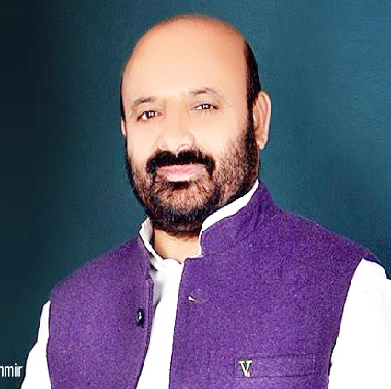
JAMMU, Sep 8: Senior BJP leader and former Minister Bali Bhagat on Tuesday welcomed the reopening of the 1998 Wandhama massacre case and other long-pending terror cases, saying the decision has finally rekindled hope for justice after nearly three decades. He said the reopening of these files is not merely an investigative exercise but a stark reminder of the historic failure of the National Conference governments to secure justice for the victims of terrorism.
Launching a scathing attack on Dr. Farooq Abdullah and the National Conference, Bhagat alleged that the party, despite ruling Jammu and Kashmir for several years, failed to ensure that those responsible for some of the most horrific terror crimes in the Valley were brought to justice.
“The reopening of these cases has exposed the National Conference’s failure to protect innocent lives and its inability to deliver justice. Farooq Abdullah and his government had the authority, the administrative machinery and the constitutional responsibility to pursue these investigations vigorously. Instead, the victims were forgotten, the perpetrators remained free, and the files were allowed to gather dust,” Bhagat said.
He alleged that the NC leadership repeatedly spoke about peace and normalcy but failed to stand firmly with the families of those brutally murdered by terrorists.
“The massacre at Wandhama, the assassination of BJP stalwart Tika Lal Taploo, the killing of Justice Neelkanth Ganjoo, Sarla Bhat and Sarwanand Kaul Premi were not isolated incidents. They were part of a systematic campaign of terror against Kashmiri Hindus. Yet successive National Conference governments failed to ensure timely justice or inspire confidence among the victims’ families,” he said.
Bhagat also demanded that investigations into all massacres and selective killings in the erstwhile Doda district, Udhampur, Kathua, Poonch, Rajouri and other parts of the Jammu province be taken up with the same seriousness and urgency as the cases in Kashmir. He said victims of terrorism in the Jammu region and their families are equally entitled to truth and justice, and no case should remain forgotten merely because it occurred outside the Valley.
Bhagat said the reopening of these investigations has shattered the misconception that terror crimes can be erased by the passage of time.
“Justice delayed is not justice denied. Every innocent life lost to terrorism deserves justice, irrespective of whether 28 days or 28 years have passed. The people of Jammu and Kashmir have every right to ask why these investigations remained dormant for decades and why successive National Conference governments failed to pursue them with seriousness,” he said.
The BJP leader alleged that while the National Conference remained engrossed in political power, the voices of terror victims and displaced Kashmiri Hindus were ignored.
“History will not only remember those who pulled the trigger; it will also judge those who failed to ensure that the guilty were brought before the law. The National Conference cannot escape accountability for its prolonged administrative failures in pursuing justice for these victims,” he asserted.
Bhagat said the renewed investigations must proceed without fear or favour and that every conspirator, perpetrator and facilitator of terror must be identified and prosecuted.
“No matter how many years have passed, terrorism has no limitation period. Those who committed these barbaric crimes and those who shielded or enabled them must face the full force of the law. Justice for the victims of Kashmir’s terror is a national obligation, not a political choice,” he said.
Calling the reopening of the cases a watershed moment, Bhagat expressed confidence that the investigating agencies would leave no stone unturned in uncovering the truth.
“Truth can be delayed, but it cannot be buried forever. The reopening of these cases is a reminder that justice ultimately prevails, and it also stands as an indictment of those governments that failed to deliver it when they had the opportunity. The National Conference must answer before the people for allowing these cases to remain forgotten for nearly three decades,” Bali Bhagat added.