
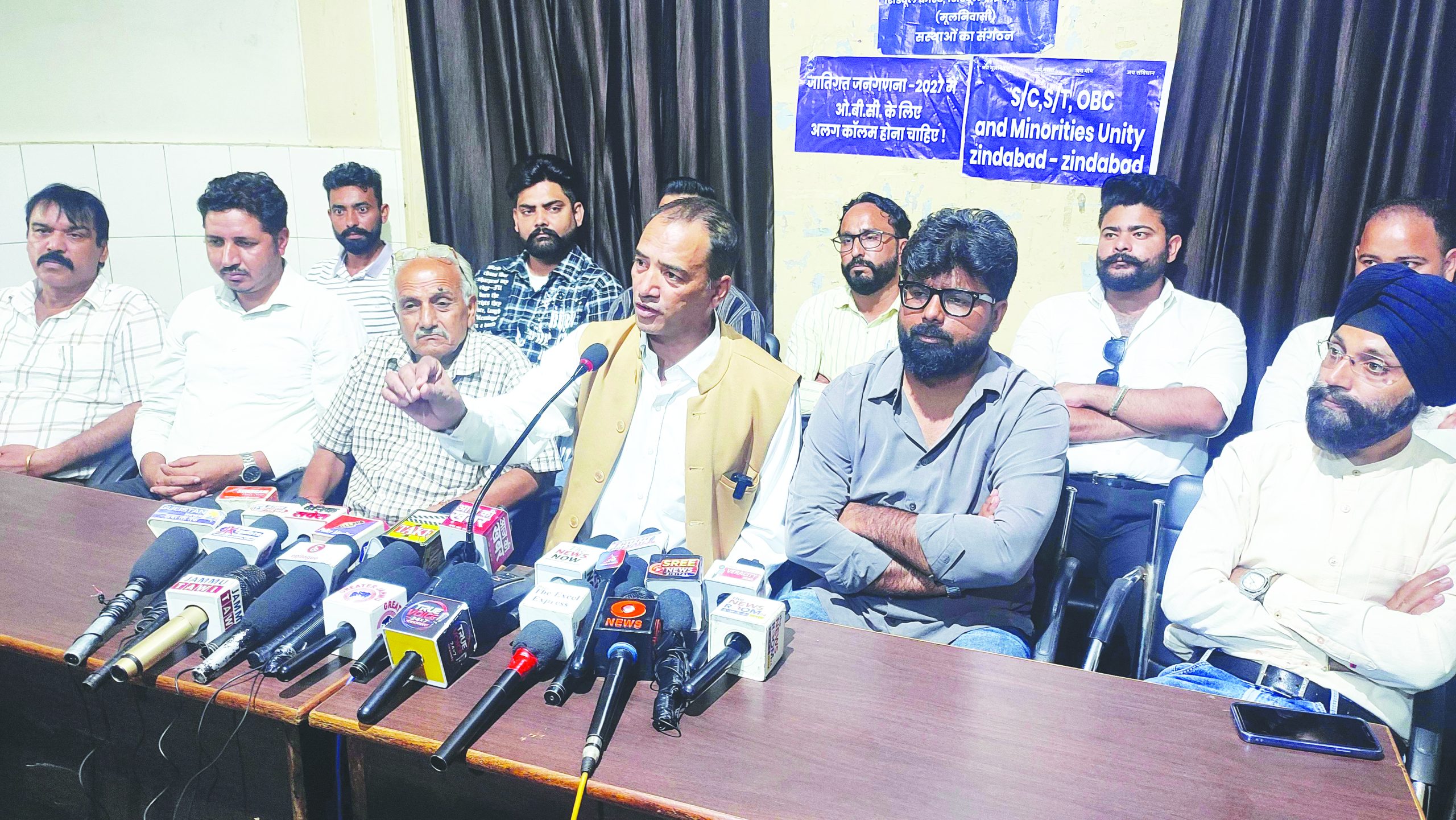
SC, ST, OBC & Minority Rights Forum seeks increase in SC quota and inclusion of OBC data in Census
JAMMU, Sep 7: The SC, ST, OBC & Minority Rights Forum held a press conference at the Press Club, Jammu, on Monday, with Forum Chairman Narinder Datt calling for stronger measures to protect the constitutional rights of reserved and disadvantaged communities.
Addressing the media, Narinder Datt said elected representatives belonging to reserved categories had raised issues concerning reservation in promotions and transfer policy before Chief Minister Omar Abdullah. He said the Forum would firmly support elected representatives whenever they raise issues concerning the constitutional rights of their communities and urged the Chief Minister to take concrete and timely action on the demands.
Datt also appealed to the Central Government, Prime Minister, Chief Minister and Lieutenant Governor to consider increasing SC reservation in Jammu and Kashmir from the existing 8 per cent to 15 per cent, stating that the move would help address the welfare and representation concerns of the Scheduled Caste community.
On demands for replacing or abolishing reservation on economic grounds, Datt argued that reservation should not be viewed merely as a poverty-removal scheme. He said it is a constitutional mechanism intended to address caste-based discrimination, social oppression and historical social backwardness.
He maintained that any debate on ending reservation should also address the persistence of the caste system and caste-based discrimination. According to him, as long as such discrimination continues, the need for measures aimed at social justice would remain.
Responding to questions regarding the competence of doctors, engineers and other professionals belonging to reserved categories, Datt said reservation may provide an opportunity at the admission stage, but after admission, students undergo the same curriculum, training and examinations. He therefore termed it unjustified to question the professional competence of individuals merely on the basis of their reservation status.
The Forum Chairman also demanded that an OBC column be included in the Census form, saying this would help establish an accurate record of the population and social status of the OBC community.
Sardar Narinder Singh Khalsa, President, Shiromani Akali Dal, Jammu & Kashmir; Sardar Harshsees Singh, Youth President, Shiromani Akali Dal, Jammu & Kashmir; and Comrade Daljit Singh stressed that social institutions and systems should function in accordance with the Constitution and that the rights of every section of society must be respected.
They also emphasised the importance of maintaining social harmony and expressed support for weaker and disadvantaged sections.
Social activists Kartik Bhagat and Ankush Bhagat, President, Bhagat Youth Club, stressed the importance of social unity and said any violation of constitutional rights should be opposed through peaceful, democratic and lawful means.
Advocate Rajat Rameet and Advocate Satish Vidrohi said the debate over reservation should be based on facts and the actual proportion of reservation rather than emotion or misinformation. They said categories including SC, OBC, ST-1, ST-2, ALC and EWS should be considered collectively while assessing the overall reservation structure.
Ashok Bhagat, Chairman, All Jammu & Kashmir Megh Sabha, Akhnoor Unit, said society must remain vigilant about its constitutional rights and be prepared for democratic and peaceful movements whenever necessary to safeguard them.
Rakesh Keemti, President, Sadguru Kabir Nowjwan Sabha; Rajinder Bhagat, Vice President, All Jammu & Kashmir Megh Sabha; and Vishal Bhagat also emphasised social unity, brotherhood and the protection of constitutional rights.
The Forum maintained that it was not opposed to any particular community, but stood for social justice, equality, constitutional rights and social harmony. It said it would continue to pursue the protection of constitutional rights through democratic and peaceful means.